



Normal Function
The MED12 gene provides instructions for making a protein that forms one part (subunit) of a protein complex called Mediator. This complex is a large group of proteins that work together to regulate gene activity. Mediator connects transcription factors, which are proteins that influence whether genes are turned off or on, with an enzyme called RNA polymerase II. Once transcription factors are attached, RNA polymerase II can start the process of building proteins.
As part of the Mediator complex, the MED12 protein is involved in many aspects of early development, including the development of nerve cells (neurons) in the brain. The MED12 protein is part of several chemical signaling pathways. These pathways help direct a broad range of cellular activities, such as cell growth, cell movement (migration), and the process by which cells mature to carry out specific functions (differentiation).
Health Conditions Related to Genetic Changes
FG syndrome
Genetic changes that cause disease are called pathogenic variants. Pathogenic variants in the MED12 gene can cause FG syndrome type 1, which is also sometimes called Opitz-Kaveggia syndrome. This condition is characterized by intellectual disabilities, weak muscle tone (hypotonia), broad and flat thumbs, abnormalities of the tissue that connects the left and right halves of the brain (the corpus callosum), and an obstruction of the anal opening (imperforate anus). FG syndrome type 1 typically affects men and boys.
Two of the pathogenic variants that cause FG syndrome type 1 change a single protein building block (amino acid) in the MED12 protein. One pathogenic variant replaces the amino acid arginine with the amino acid tryptophan at protein position 961 (written as Arg961Trp or R961W). The other replaces the amino acid glycine with the amino acid glutamic acid at protein position 958 (written as Gly958Glu or G958E). This alters the structure of the MED12 protein, which likely disrupts its ability to regulate gene activity during development. However, it is unclear exactly how these genetic changes lead to the intellectual disabilities and other features seen in people with FG syndrome type 1.
More About This Health ConditionLujan syndrome
Pathogenic variants in the MED12 gene can cause Lujan syndrome, a disorder that is characterized by intellectual disabilities and distinctive physical features, which include a tall, thin body; a long and narrow face; and long fingers and toes with an unusually large range of movement at the joints (hyperextensibility). Lujan syndrome typically affects men and boys. One pathogenic variant in the MED12 gene that causes Lujan syndrome replaces the amino acid asparagine with the amino acid serine at position 1007 of the MED12 protein (written as Asn1007Ser or N1007S). This alters the structure of the MED12 protein and likely disrupts its ability to regulate gene activity. However, it is not known exactly how this change leads to the specific features seen in people with Lujan syndrome.
More About This Health ConditionOhdo syndrome, Maat-Kievit-Brunner type
Pathogenic variants in the MED12 gene can also cause the Maat-Kievit-Brunner type of Ohdo syndrome, which is a rare condition that is characterized by intellectual disabilities and distinctive facial features. This condition typically affects men and boys, although girls and women are sometimes affected. The pathogenic variants that cause the Maat-Kievit-Brunner type of Ohdo syndrome typically lead to the substitution of one amino acid for another in the MED12 protein. This changes the structure of the MED12 protein and impairs its ability to control gene activity. It is unclear exactly how these changes lead to the particular cognitive and physical features seen in people with the Maat-Kievit-Brunner type of Ohdo syndrome.
More About This Health ConditionProstate cancer
MedlinePlus Genetics provides information about Prostate cancer
More About This Health ConditionOther disorders
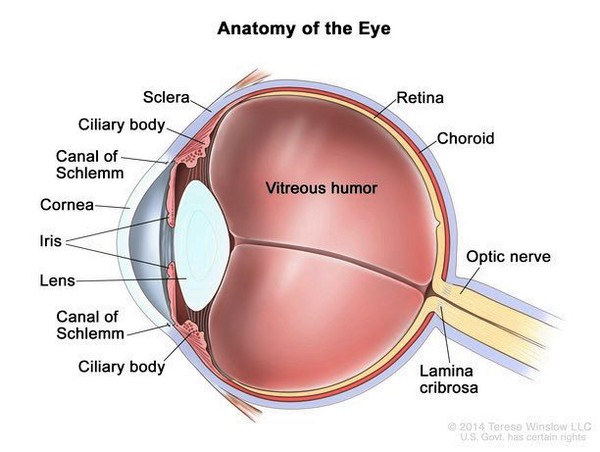
Pathogenic variants in the MED12 gene can also cause Hardikar syndrome, which is characterized by an opening in the lip (cleft lip) with or without an opening in the roof of the mouth (cleft palate), heart problems, and abnormalities of the gastrointestinal system. People with Hardikar syndrome may also have an eye condition called pigmentary retinopathy, which results from the breakdown (degeneration) of the light-sensing tissue at the back of the eye (the retina). Pigmentary retinopathy gives the retina a speckled and streaked appearance, which can be seen during an eye exam, and it may cause vision loss. Intelligence is typically not affected in people with Hardikar syndrome. Unlike some of the other conditions that are caused by pathogenic variants in the MED12 gene, Hardikar syndrome affects mostly girls and women.
Pathogenic variants in the MED12 gene can also cause a condition called nonspecific intellectual disability that can affect both men and women. Features of this condition include intellectual disabilities along with other signs and symptoms that may overlap with those of the disorders listed above. However, the features do not meet the diagnostic criteria for these disorders. Because the conditions caused by pathogenic variants in the MED12 gene have similar features, they are sometimes referred to as MED12-related disorders.
Some pathogenic variants are acquired during a person's lifetime and are present only in certain cells. These changes are called somatic variants. Somatic variants in the MED12 gene have been found in several types of cancerous tumors, including some prostate cancers and gastrointestinal cancers. MED12 somatic variants have also been seen in some noncancerous growths, such as uterine leiomyomas (also called uterine fibroids). Studies suggest that somatic variants in the MED12 gene alter the function of the MED12 protein, which likely disrupts normal cell signaling and the regulation of cell growth. As a result, certain cells may become able to divide in an uncontrolled way, which can cause tumors.
Other Names for This Gene
- CAGH45
- HOPA
- KIAA0192
- Kohtalo homolog
- Kto
- OKS
- OPA1
- TRAP230
Additional Information & Resources
Tests Listed in the Genetic Testing Registry

Scientific Articles on PubMed
Catalog of Genes and Diseases from OMIM
References
- Barbieri CE, Baca SC, Lawrence MS, Demichelis F, Blattner M, Theurillat JP, White TA, Stojanov P, Van Allen E, Stransky N, Nickerson E, Chae SS, Boysen G, Auclair D, Onofrio RC, Park K, Kitabayashi N, MacDonald TY, Sheikh K, Vuong T, Guiducci C, Cibulskis K, Sivachenko A, Carter SL, Saksena G, Voet D, Hussain WM, Ramos AH, Winckler W, Redman MC, Ardlie K, Tewari AK, Mosquera JM, Rupp N, Wild PJ, Moch H, Morrissey C, Nelson PS, Kantoff PW, Gabriel SB, Golub TR, Meyerson M, Lander ES, Getz G, Rubin MA, Garraway LA. Exome sequencing identifies recurrent SPOP, FOXA1 and MED12 mutations in prostate cancer. Nat Genet. 2012 May 20;44(6):685-9. doi: 10.1038/ng.2279. Citation on PubMed or Free article on PubMed Central
- Charzewska A, Maiwald R, Kahrizi K, Oehl-Jaschkowitz B, Dufke A, Lemke JR, Enders H, Najmabadi H, Tzschach A, Hachmann W, Jensen C, Bienek M, Poznanski J, Nawara M, Chilarska T, Obersztyn E, Hoffman-Zacharska D, Gos M, Bal J, Kalscheuer VM. The power of the Mediator complex-Expanding the genetic architecture and phenotypic spectrum of MED12-related disorders. Clin Genet. 2018 Nov;94(5):450-456. doi: 10.1111/cge.13412. Epub 2018 Aug 9. Citation on PubMed
- Ding N, Zhou H, Esteve PO, Chin HG, Kim S, Xu X, Joseph SM, Friez MJ, Schwartz CE, Pradhan S, Boyer TG. Mediator links epigenetic silencing of neuronal gene expression with x-linked mental retardation. Mol Cell. 2008 Aug 8;31(3):347-59. doi: 10.1016/j.molcel.2008.05.023. Citation on PubMed or Free article on PubMed Central
- Gonzalez CG, Akula S, Burleson M. The role of mediator subunit 12 in tumorigenesis and cancer therapeutics. Oncol Lett. 2022 Mar;23(3):74. doi: 10.3892/ol.2022.13194. Epub 2022 Jan 10. Citation on PubMed
- Graham JM Jr, Schwartz CE. MED12 related disorders. Am J Med Genet A. 2013 Nov;161A(11):2734-40. doi: 10.1002/ajmg.a.36183. Epub 2013 Oct 10. Citation on PubMed
- Je EM, Kim MR, Min KO, Yoo NJ, Lee SH. Mutational analysis of MED12 exon 2 in uterine leiomyoma and other common tumors. Int J Cancer. 2012 Sep 15;131(6):E1044-7. doi: 10.1002/ijc.27610. Epub 2012 May 8. Citation on PubMed
- Kampjarvi K, Makinen N, Kilpivaara O, Arola J, Heinonen HR, Bohm J, Abdel-Wahab O, Lehtonen HJ, Pelttari LM, Mehine M, Schrewe H, Nevanlinna H, Levine RL, Hokland P, Bohling T, Mecklin JP, Butzow R, Aaltonen LA, Vahteristo P. Somatic MED12 mutations in uterine leiomyosarcoma and colorectal cancer. Br J Cancer. 2012 Nov 6;107(10):1761-5. doi: 10.1038/bjc.2012.428. Epub 2012 Sep 20. Citation on PubMed or Free article on PubMed Central
- Lyons MJ. MED12-Related Disorders. 2008 Jun 23 [updated 2021 Aug 12]. In: Adam MP, Bick S, Mirzaa GM, Wallace SE, Amemiya A, editors. GeneReviews(R) [Internet]. Seattle (WA): University of Washington, Seattle; 1993-2026. Available from http://www.ncbi.nlm.nih.gov/books/NBK1676/ Citation on PubMed
- Maia N, Ibarluzea N, Misra-Isrie M, Koboldt DC, Marques I, Soares G, Santos R, Marcelis CLM, Keski-Filppula R, Guitart M, Gabau Vila E, Lehman A, Hickey S, Mori M, Terhal P, Valenzuela I, Lasa-Aranzasti A, Cueto-Gonzalez AM, Chhouk BH, Yeh RC, Neil JE, Abu-Libde B, Kleefstra T, Elting MW, Csaszar A, Karteszi J, Bessenyei B, van Bokhoven H, Jorge P, van Hagen JM, de Brouwer APM. Missense MED12 variants in 22 males with intellectual disability: From nonspecific symptoms to complete syndromes. Am J Med Genet A. 2023 Jan;191(1):135-143. doi: 10.1002/ajmg.a.63004. Epub 2022 Oct 22. Citation on PubMed
- Makinen N, Mehine M, Tolvanen J, Kaasinen E, Li Y, Lehtonen HJ, Gentile M, Yan J, Enge M, Taipale M, Aavikko M, Katainen R, Virolainen E, Bohling T, Koski TA, Launonen V, Sjoberg J, Taipale J, Vahteristo P, Aaltonen LA. MED12, the mediator complex subunit 12 gene, is mutated at high frequency in uterine leiomyomas. Science. 2011 Oct 14;334(6053):252-5. doi: 10.1126/science.1208930. Epub 2011 Aug 25. Citation on PubMed
- Murakami H, Enomoto Y, Tsurusaki Y, Sugio Y, Kurosawa K. A female patient with X-linked Ohdo syndrome of the Maat-Kievit-Brunner phenotype caused by a novel variant of MED12. Congenit Anom (Kyoto). 2020 May;60(3):91-93. doi: 10.1111/cga.12350. Epub 2019 Jul 29. No abstract available. Citation on PubMed
- Perot G, Croce S, Ribeiro A, Lagarde P, Velasco V, Neuville A, Coindre JM, Stoeckle E, Floquet A, MacGrogan G, Chibon F. MED12 alterations in both human benign and malignant uterine soft tissue tumors. PLoS One. 2012;7(6):e40015. doi: 10.1371/journal.pone.0040015. Epub 2012 Jun 29. Citation on PubMed or Free article on PubMed Central
- Philibert RA, Bohle P, Secrest D, Deaderick J, Sandhu H, Crowe R, Black DW. The association of the HOPA(12bp) polymorphism with schizophrenia in the NIMH Genetics Initiative for Schizophrenia sample. Am J Med Genet B Neuropsychiatr Genet. 2007 Sep 5;144B(6):743-7. doi: 10.1002/ajmg.b.30489. Citation on PubMed
- Philibert RA, Madan A. Role of MED12 in transcription and human behavior. Pharmacogenomics. 2007 Aug;8(8):909-16. doi: 10.2217/14622416.8.8.909. Citation on PubMed
- Philibert RA. A meta-analysis of the association of the HOPA12bp polymorphism and schizophrenia. Psychiatr Genet. 2006 Apr;16(2):73-6. doi: 10.1097/01.ypg.0000194443.81813.f0. Citation on PubMed
- Plassche SV, Brouwer AP. MED12-Related (Neuro)Developmental Disorders: A Question of Causality. Genes (Basel). 2021 Apr 28;12(5):663. doi: 10.3390/genes12050663. Citation on PubMed
- Risheg H, Graham JM Jr, Clark RD, Rogers RC, Opitz JM, Moeschler JB, Peiffer AP, May M, Joseph SM, Jones JR, Stevenson RE, Schwartz CE, Friez MJ. A recurrent mutation in MED12 leading to R961W causes Opitz-Kaveggia syndrome. Nat Genet. 2007 Apr;39(4):451-3. doi: 10.1038/ng1992. Epub 2007 Mar 4. Citation on PubMed
- Rubinato E, Rondeau S, Giuliano F, Kossorotoff M, Parodi M, Gherbi S, Steffan J, Jonard L, Marlin S. MED12 missense mutation in a three-generation family. Clinical characterization of MED12-related disorders and literature review. Eur J Med Genet. 2020 Mar;63(3):103768. doi: 10.1016/j.ejmg.2019.103768. Epub 2019 Sep 16. Citation on PubMed
- Rump P, Niessen RC, Verbruggen KT, Brouwer OF, de Raad M, Hordijk R. A novel mutation in MED12 causes FG syndrome (Opitz-Kaveggia syndrome). Clin Genet. 2011 Feb;79(2):183-8. doi: 10.1111/j.1399-0004.2010.01449.x. Citation on PubMed
- Schwartz CE, Tarpey PS, Lubs HA, Verloes A, May MM, Risheg H, Friez MJ, Futreal PA, Edkins S, Teague J, Briault S, Skinner C, Bauer-Carlin A, Simensen RJ, Joseph SM, Jones JR, Gecz J, Stratton MR, Raymond FL, Stevenson RE. The original Lujan syndrome family has a novel missense mutation (p.N1007S) in the MED12 gene. J Med Genet. 2007 Jul;44(7):472-7. doi: 10.1136/jmg.2006.048637. Epub 2007 Mar 16. Citation on PubMed or Free article on PubMed Central
- Vulto-van Silfhout AT, de Vries BB, van Bon BW, Hoischen A, Ruiterkamp-Versteeg M, Gilissen C, Gao F, van Zwam M, Harteveld CL, van Essen AJ, Hamel BC, Kleefstra T, Willemsen MA, Yntema HG, van Bokhoven H, Brunner HG, Boyer TG, de Brouwer AP. Mutations in MED12 cause X-linked Ohdo syndrome. Am J Hum Genet. 2013 Mar 7;92(3):401-6. doi: 10.1016/j.ajhg.2013.01.007. Epub 2013 Feb 7. Citation on PubMed or Free article on PubMed Central
- Warmoeskerken T, Theunis M, Van den Bogaert K, Devriendt K, Breckpot J. Differentiating the Clinical and Variant Spectrum of Hardikar Syndrome From Other MED12 -Related Developmental Disorders. Am J Med Genet A. 2026 Jul;200(7):1619-1650. doi: 10.1002/ajmg.a.70122. Epub 2026 Mar 13. Citation on PubMed
The information on this site should not be used as a substitute for professional medical care or advice. Contact a health care provider if you have questions about your health.