



Description
Trisomy X, also called triple X syndrome or 47,XXX, is characterized by the presence of an additional X chromosome in each cell. Girls and women with this condition have three X chromosomes instead of the usual two. The signs and symptoms of trisomy X can vary widely. Some people with trisomy X do not appear to have any features of the condition, while others have multiple signs and symptoms. The most common feature of trisomy X is tall stature.
People with trisomy X have an increased risk of various issues:
- Learning disabilities
- Delayed development of speech and language skills
- Delayed development of motor skills (such as sitting and walking)
- Weak muscle tone (hypotonia)
- Anxiety disorders
- Mood disorders
- Autism spectrum disorder, a developmental condition that affects communication and social skills
- Attention-deficit/hyperactivity disorder (ADHD)
- Seizures
- Kidney abnormalities
Most women with trisomy X develop normal female sex characteristics and are able to conceive children. However, some may have abnormal or missing ovaries (premature ovarian dysgenesis), or they may have an increased risk of an early loss of ovarian function (primary ovarian insufficiency). Primary ovarian insufficiency is characterized by the end of menstruation by age 40, which can cause difficulties conceiving a child (subfertility).
Frequency
Trisomy X occurs in about 1 in 1,000 newborn girls. Trisomy X is the most common disorder in girls and women that involves changes in the number of sex chromosomes. Five to 10 babies with trisomy X are born in the United States each day. However, as the signs and the symptoms of this condition are often mild, it is estimated that only 10 percent of affected individuals receive a diagnosis.
Causes
People normally have 46 chromosomes in each cell. Two of the 46 chromosomes, known as X and Y, are called sex chromosomes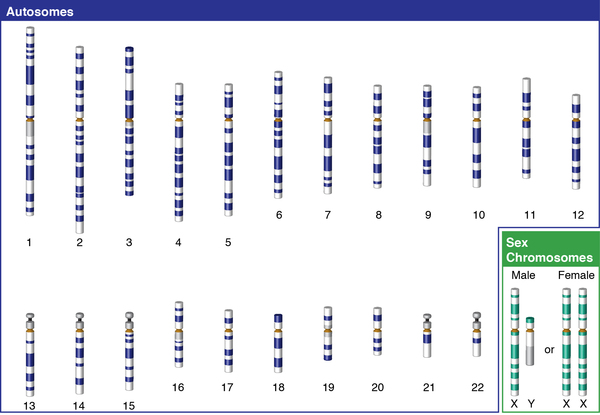 because they help determine whether a person will develop male or female sex characteristics. Females typically have two X chromosomes (46,XX), and males typically have one X chromosome and one Y chromosome (46,XY).
Trisomy X results from an extra copy of the X chromosome in each of a female's cells. As a result of the extra X chromosome, each cell has a total of 47 chromosomes (47,XXX) instead of the usual 46.
Some females with trisomy X have an extra X chromosome in only some of their cells. This phenomenon is called 46,XX/47,XXX mosaicism. Individuals with this form of the condition typically have milder signs and symptoms than those with trisomy X in all of their cells.
Early in the embryonic development of females, one of the X chromosomes is randomly and permanently inactivated in cells other than egg cells. This phenomenon is called X-inactivation. X-inactivation ensures that females have only one functional copy of the X chromosome in each cell.
Some genes on the X chromosome do not undergo X-inactivation. Many of these genes are located at the ends of the X chromosome and are also present on the Y chromosome. As a result, males and females each have two functional copies of these genes. Many of these genes are essential for normal development. It is likely that the extra copies of these genes contributes to the signs and symptoms of trisomy X.
Additionally, variations in the pattern of X-inactivation between individuals and even among cells in a single individual probably play a large role in the range of features seen in people with trisomy X.
Inheritance
Most cases of trisomy X are not inherited. The addition of another X chromosome usually occurs as a random event during the formation of reproductive cells (eggs and sperm). An error in cell division called nondisjunction can result in an egg or sperm cell with an abnormal number of chromosomes. In the case of trisomy X, an egg or sperm cell gains an extra copy of the X chromosome. If one of these atypical reproductive cells contributes to the genetic makeup of a child, the child will have an extra X chromosome in each of the body's cells and have trisomy X.
46,XX/47,XXX mosaicism is also not inherited. It occurs as a random event during cell division in early embryonic development. In people with 46,XX/47,XXX mosaicism, some of the cells have two X chromosomes (46,XX) and other cells have three X chromosomes (47,XXX). 46,XX/47,XXX mosaicism is estimated to occur in 10 to 20 percent of people with trisomy X.
Other Names for This Condition
- 47,XXX
- 47,XXX syndrome
- Triple X syndrome
- Triplo X syndrome
- Trisomy X
- XXX syndrome
Additional Information & Resources
Genetic Testing Information

Genetic and Rare Diseases Information Center
Patient Support and Advocacy Resources
Clinical Trials
Scientific Articles on PubMed
References
- Berglund A, Stochholm K, Gravholt CH. The comorbidity landscape of 47,XXX syndrome: A nationwide epidemiologic study. Genet Med. 2022 Feb;24(2):475-487. doi: 10.1016/j.gim.2021.10.012. Epub 2021 Nov 30. Citation on PubMed
- Boedeker D, Corado A, Hunkler K. Trisomy X Syndrome. 2026 Jul 5. In: StatPearls [Internet]. Treasure Island (FL): StatPearls Publishing; 2026 Jan-. Available from http://www.ncbi.nlm.nih.gov/books/NBK623725/ Citation on PubMed
- Butnariu L, Rusu C, Caba L, Panzaru M, Braha E, Gramescu M, Popescu R, Bujoranu C, Gorduza EV. Genotype- phenotype correlation in trisomy X: a retrospective study of a selected group of 36 patients and review of literature. Rev Med Chir Soc Med Nat Iasi. 2013 Jul-Sep;117(3):714-21. Citation on PubMed
- Gravholt CH, Ferlin A, Gromoll J, Juul A, Raznahan A, van Rijn S, Rogol AD, Skakkebaek A, Tartaglia N, Swaab H. New developments and future trajectories in supernumerary sex chromosome abnormalities: a summary of the 2022 3rd International Workshop on Klinefelter Syndrome, Trisomy X, and XYY. Endocr Connect. 2023 Feb 8;12(3):e220500. doi: 10.1530/EC-22-0500. Print 2023 Mar 1. Citation on PubMed
- Nielsen MM, Trolle C, Vang S, Hornshoj H, Skakkebaek A, Hedegaard J, Nordentoft I, Pedersen JS, Gravholt CH. Epigenetic and transcriptomic consequences of excess X-chromosome material in 47,XXX syndrome-A comparison with Turner syndrome and 46,XX females. Am J Med Genet C Semin Med Genet. 2020 Jun;184(2):279-293. doi: 10.1002/ajmg.c.31799. Epub 2020 Jun 3. Citation on PubMed
- Otter M, Crins PML, Campforts BCM, Stumpel CTRM, van Amelsvoort TAMJ, Vingerhoets C. Social functioning and emotion recognition in adults with triple X syndrome. BJPsych Open. 2021 Feb 15;7(2):e51. doi: 10.1192/bjo.2021.8. Citation on PubMed
- Raznahan A, Parikshak NN, Chandran V, Blumenthal JD, Clasen LS, Alexander-Bloch AF, Zinn AR, Wangsa D, Wise J, Murphy DGM, Bolton PF, Ried T, Ross J, Giedd JN, Geschwind DH. Sex-chromosome dosage effects on gene expression in humans. Proc Natl Acad Sci U S A. 2018 Jul 10;115(28):7398-7403. doi: 10.1073/pnas.1802889115. Epub 2018 Jun 26. Citation on PubMed
- Skuse D, Printzlau F, Wolstencroft J. Sex chromosome aneuploidies. Handb Clin Neurol. 2018;147:355-376. doi: 10.1016/B978-0-444-63233-3.00024-5. Citation on PubMed
- Stochholm K, Juul S, Gravholt CH. Mortality and incidence in women with 47,XXX and variants. Am J Med Genet A. 2010 Feb;152A(2):367-72. doi: 10.1002/ajmg.a.33214. Citation on PubMed
- Tallaksen HBL, Johannsen EB, Just J, Viuff MH, Gravholt CH, Skakkebaek A. The multi-omic landscape of sex chromosome abnormalities: current status and future directions. Endocr Connect. 2023 Aug 1;12(9):e230011. doi: 10.1530/EC-23-0011. Citation on PubMed
- Tartaglia NR, Howell S, Sutherland A, Wilson R, Wilson L. A review of trisomy X (47,XXX). Orphanet J Rare Dis. 2010 May 11;5:8. doi: 10.1186/1750-1172-5-8. Citation on PubMed or Free article on PubMed Central
The information on this site should not be used as a substitute for professional medical care or advice. Contact a health care provider if you have questions about your health.