



Description
Autosomal dominant tubulointerstitial kidney disease-REN (ADTKD-REN) is part of a group of inherited disorders (collectively called autosomal dominant tubulointerstitial kidney disease or ADTKD) that cause a gradual loss of kidney function. In people with ADTKD-REN, the signs and symptoms of kidney disease usually become apparent during childhood or adolescence.
The signs and symptoms of ADTKD-REN can include:
- Low blood pressure (hypotension)
- Mildly increased levels of potassium in the blood (hyperkalemia)
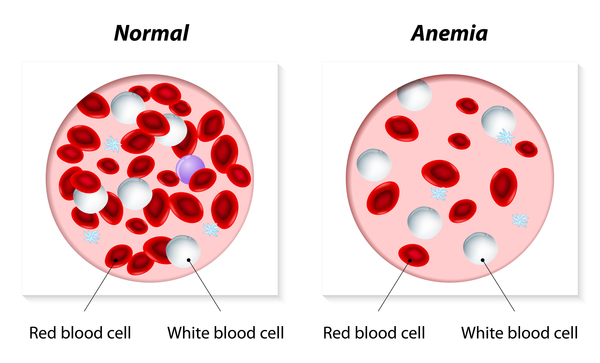
- A low number of healthy red blood cells (anemia
 ) during childhood
- High blood levels of a chemical called uric acid that is usually removed from the body in urine (hyperuricemia)
- A form of arthritis caused by a buildup of uric acid crystals in the joints (gout)
- Low blood levels and decreased activity of a protein called renin, which is produced in the kidneys
- Kidney damage due to illness, dehydration, or certain medications
Treatment may help stabilize kidney function in some people with ADTKD-REN, which can improve or prevent some of the signs and symptoms. However, as the disease progresses, the kidneys lose the ability to properly filter fluid and waste products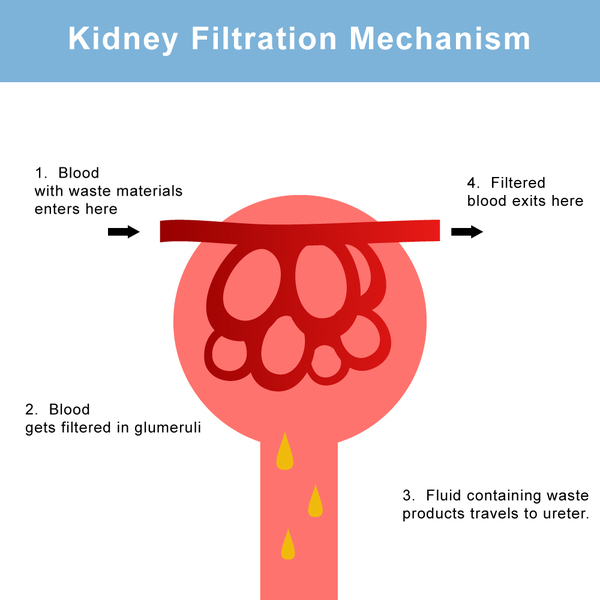 from the body. This causes chronic kidney disease, which can lead to kidney failure. People with kidney failure require either dialysis to remove waste from the blood or a kidney transplant.
Frequency
Although ADTKD is the third most common genetic kidney disease, ADTKD-REN is rare. At least 50 families with this condition have been reported in the scientific literature.
Causes
Genetic changes that cause disease are called pathogenic variants. Pathogenic variants in one copy of the REN gene in each cell cause ADTKD-REN. The REN gene provides instructions for making renin, which plays an important role in regulating blood pressure and fluid levels in the body.
The pathogenic variants in the REN gene that cause ADTKD-REN lead to the production of an abnormal version of renin that does not function properly. In affected individuals, functional renin is only produced from the copy of the gene without a pathogenic variant. As a result, people with ADTKD-REN produce less functional renin. In addition, the abnormal renin accumulates inside kidney cells, causing these cells to gradually die off. This leads to the progressive loss of kidney function seen in people with ADTKD-REN.
Inheritance
As the name suggests, this condition is inherited in an autosomal dominant pattern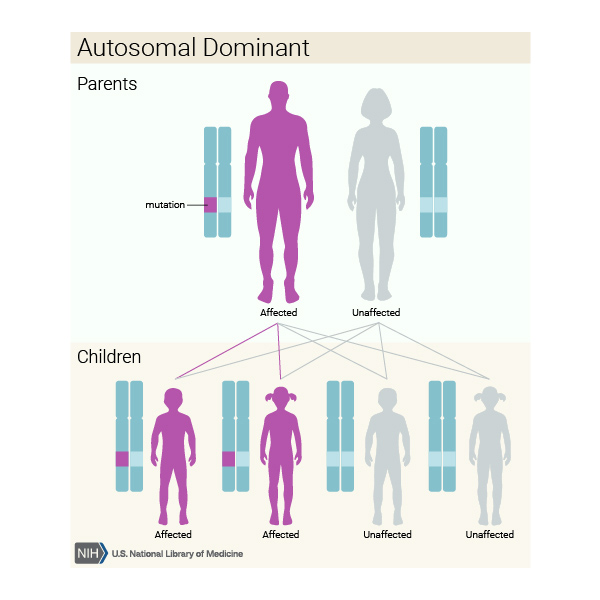 , which means one copy of the altered gene in each cell is sufficient to cause the disorder.
Other Names for This Condition
- ADTKD-REN
- ADTKD4
- Familial juvenile hyperuricemic nephropathy type 2
- FJHN type 2
- REN-associated familial juvenile hyperuricemic nephropathy
- REN-associated FJHN
- REN-associated kidney disease
- REN-related kidney disease
Additional Information & Resources
Genetic Testing Information

Genetic and Rare Diseases Information Center
Patient Support and Advocacy Resources
Catalog of Genes and Diseases from OMIM
Scientific Articles on PubMed
References
- Beck BB, Trachtman H, Gitman M, Miller I, Sayer JA, Pannes A, Baasner A, Hildebrandt F, Wolf MT. Autosomal dominant mutation in the signal peptide of renin in a kindred with anemia, hyperuricemia, and CKD. Am J Kidney Dis. 2011 Nov;58(5):821-5. doi: 10.1053/j.ajkd.2011.06.029. Epub 2011 Sep 8. Citation on PubMed or Free article on PubMed Central
- Bleyer AJ, Kidd KO, Zivna M, Kmoch S. Autosomal Dominant Tubulointerstitial Kidney Disease: A Review. Am J Kidney Dis. 2025 Nov;86(5):677-689. doi: 10.1053/j.ajkd.2025.05.015. Epub 2025 Aug 18. Citation on PubMed
- Bleyer AJ, Wolf MT, Kidd KO, Zivna M, Kmoch S. Autosomal dominant tubulointerstitial kidney disease: more than just HNF1beta. Pediatr Nephrol. 2022 May;37(5):933-946. doi: 10.1007/s00467-021-05118-4. Epub 2021 May 22. Citation on PubMed
- Bleyer AJ, Zivna M, Hulkova H, Hodanova K, Vyletal P, Sikora J, Zivny J, Sovova J, Hart TC, Adams JN, Elleder M, Kapp K, Haws R, Cornell LD, Kmoch S, Hart PS. Clinical and molecular characterization of a family with a dominant renin gene mutation and response to treatment with fludrocortisone. Clin Nephrol. 2010 Dec;74(6):411-22. doi: 10.5414/cnp74411. Citation on PubMed or Free article on PubMed Central
- Eckardt KU, Alper SL, Antignac C, Bleyer AJ, Chauveau D, Dahan K, Deltas C, Hosking A, Kmoch S, Rampoldi L, Wiesener M, Wolf MT, Devuyst O; Kidney Disease: Improving Global Outcomes. Autosomal dominant tubulointerstitial kidney disease: diagnosis, classification, and management--A KDIGO consensus report. Kidney Int. 2015 Oct;88(4):676-83. doi: 10.1038/ki.2015.28. Epub 2015 Mar 4. Citation on PubMed
- Econimo L, Schaeffer C, Zeni L, Cortinovis R, Alberici F, Rampoldi L, Scolari F, Izzi C. Autosomal Dominant Tubulointerstitial Kidney Disease: An Emerging Cause of Genetic CKD. Kidney Int Rep. 2022 Aug 29;7(11):2332-2344. doi: 10.1016/j.ekir.2022.08.012. eCollection 2022 Nov. Citation on PubMed
- Levey AS, Eckardt KU, Dorman NM, Christiansen SL, Hoorn EJ, Ingelfinger JR, Inker LA, Levin A, Mehrotra R, Palevsky PM, Perazella MA, Tong A, Allison SJ, Bockenhauer D, Briggs JP, Bromberg JS, Davenport A, Feldman HI, Fouque D, Gansevoort RT, Gill JS, Greene EL, Hemmelgarn BR, Kretzler M, Lambie M, Lane PH, Laycock J, Leventhal SE, Mittelman M, Morrissey P, Ostermann M, Rees L, Ronco P, Schaefer F, St Clair Russell J, Vinck C, Walsh SB, Weiner DE, Cheung M, Jadoul M, Winkelmayer WC. Nomenclature for kidney function and disease: report of a Kidney Disease: Improving Global Outcomes (KDIGO) Consensus Conference. Kidney Int. 2020 Jun;97(6):1117-1129. doi: 10.1016/j.kint.2020.02.010. Epub 2020 Mar 9. Citation on PubMed
- Shamam YM, Hashmi MF. Autosomal Dominant Tubulointerstitial Kidney Disease. 2023 Jun 26. In: StatPearls [Internet]. Treasure Island (FL): StatPearls Publishing; 2023 Jan-. Available from http://www.ncbi.nlm.nih.gov/books/NBK568710/ Citation on PubMed
- Zivna M, Hulkova H, Matignon M, Hodanova K, Vylet'al P, Kalbacova M, Baresova V, Sikora J, Blazkova H, Zivny J, Ivanek R, Stranecky V, Sovova J, Claes K, Lerut E, Fryns JP, Hart PS, Hart TC, Adams JN, Pawtowski A, Clemessy M, Gasc JM, Gubler MC, Antignac C, Elleder M, Kapp K, Grimbert P, Bleyer AJ, Kmoch S. Dominant renin gene mutations associated with early-onset hyperuricemia, anemia, and chronic kidney failure. Am J Hum Genet. 2009 Aug;85(2):204-13. doi: 10.1016/j.ajhg.2009.07.010. Epub 2009 Aug 6. Citation on PubMed or Free article on PubMed Central
- Zivna M, Kidd K, Kmoch S, Bleyer AJ. Autosomal Dominant Tubulointerstitial Kidney Disease - REN. 2011 Apr 5 [updated 2020 Dec 10]. In: Adam MP, Bick S, Mirzaa GM, Wallace SE, Amemiya A, editors. GeneReviews(R) [Internet]. Seattle (WA): University of Washington, Seattle; 1993-2026. Available from http://www.ncbi.nlm.nih.gov/books/NBK53700/ Citation on PubMed
- Zivna M, Kidd K, Zaidan M, Vyletal P, Baresova V, Hodanova K, Sovova J, Hartmannova H, Votruba M, Treslova H, Jedlickova I, Sikora J, Hulkova H, Robins V, Hnizda A, Zivny J, Papagregoriou G, Mesnard L, Beck BB, Wenzel A, Tory K, Haeffner K, Wolf MTF, Bleyer ME, Sayer JA, Ong ACM, Balogh L, Jakubowska A, Laszkiewicz A, Clissold R, Shaw-Smith C, Munshi R, Haws RM, Izzi C, Capelli I, Santostefano M, Graziano C, Scolari F, Sussman A, Trachtman H, Decramer S, Matignon M, Grimbert P, Shoemaker LR, Stavrou C, Abdelwahed M, Belghith N, Sinclair M, Claes K, Kopel T, Moe S, Deltas C, Knebelmann B, Rampoldi L, Kmoch S, Bleyer AJ. An international cohort study of autosomal dominant tubulointerstitial kidney disease due to REN mutations identifies distinct clinical subtypes. Kidney Int. 2020 Dec;98(6):1589-1604. doi: 10.1016/j.kint.2020.06.041. Epub 2020 Aug 1. Citation on PubMed
- Zivna M, Kidd KO, Baresova V, Hulkova H, Kmoch S, Bleyer AJ Sr. Autosomal dominant tubulointerstitial kidney disease: A review. Am J Med Genet C Semin Med Genet. 2022 Sep;190(3):309-324. doi: 10.1002/ajmg.c.32008. Epub 2022 Oct 17. Citation on PubMed
The information on this site should not be used as a substitute for professional medical care or advice. Contact a health care provider if you have questions about your health.