



Description
Multiple mitochondrial dysfunctions syndrome is a group of severe conditions that begin early in life.
There are at least five types of multiple mitochondrial dysfunctions syndrome. The types have overlapping but distinct patterns of signs and symptoms, and each differ in their genetic cause.
In general, infants with multiple mitochondrial dysfunctions syndrome typically have severe brain dysfunction (encephalopathy), which can contribute to developmental delays and a loss of mental abilities and acquired skills (developmental regression). Most babies with multiple mitochondrial dysfunctions syndrome have difficulty growing and gaining weight at the expected rate (faltering weight). Individuals with this condition often have a buildup of a chemical called lactic acid in the body (lactic acidosis), which can be life-threatening. They may also have high levels of a molecule called glycine (hyperglycinemia) or elevated levels of sugar (hyperglycemia) in the blood. In most cases, people with multiple mitochondrial dysfunctions syndrome do not survive past early childhood.
Individuals with multiple mitochondrial dysfunctions syndrome type 1 often develop pulmonary arterial hypertension, a condition that is characterized by abnormally high blood pressure (hypertension) in the blood vessel that carries blood from the heart to the lungs (the pulmonary artery). Affected individuals can also have brief pauses in breathing (apnea) and muscle twitches (myoclonus).
Multiple mitochondrial dysfunctions syndrome type 2 is characterized by very severe encephalopathy and breathing difficulty (respiratory distress). About half of individuals with type 2 have a weakened heart muscle (cardiomyopathy). These individuals typically either have a thinning of the heart muscle (dilated cardiomyopathy) or a thickening of the heart muscle (hypertrophic cardiomyopathy). Both of these conditions prevent the heart from pumping blood efficiently and increase the risk of heart failure and sudden death.
Individuals with multiple mitochondrial dysfunctions syndrome type 3 can experience progressive muscle stiffness (spasticity) and paralysis of the arms and legs (quadriplegia). Nearly half of people with type 3 have vision problems resulting from the breakdown of the nerves that carry information from the eyes to the brain (optic atrophy). Although about half of people with multiple mitochondrial dysfunctions syndrome type 3 survive past early childhood, they rarely survive into adulthood.
Multiple mitochondrial dysfunctions syndrome type 4 is characterized by spasticity and vision problems. Affected individuals often have optic atrophy and involuntary movements of the eyes (nystagmus).
Multiple mitochondrial dysfunctions syndrome type 5 is characterized by nystagmus and spasticity.
Frequency
At least 150 cases of multiple mitochondrial dysfunctions syndrome have been described in the scientific literature, although its exact prevalence is unknown. It is one of several conditions that are classified as mitochondrial disorders, which affect an estimated 1 in 5,000 people worldwide.
Causes
Each type of multiple mitochondrial dysfunctions syndrome is caused by changes in one of these genes: NFU1, BOLA3, IBA57, ISCA2, and ISCA1.
Genetic changes that cause disease are called pathogenic variants. Pathogenic variants in these genes can cause the different forms of multiple mitochondrial dysfunctions syndrome:
- NFU1 gene variants cause multiple mitochondrial dysfunctions syndrome type 1
- BOLA3 gene variants cause multiple mitochondrial dysfunctions syndrome type 2
- IBA57 gene variants cause multiple mitochondrial dysfunctions syndrome type 3
- ISCA2 gene variants cause multiple mitochondrial dysfunctions syndrome type 4
- ISCA1 gene variants cause multiple mitochondrial dysfunctions syndrome type 5
The genes that are associated with multiple mitochondrial dysfunctions syndrome play important roles in the mitochondria, which are the energy-producing centers of cells. The genes provide instructions for making proteins that help create molecules called iron-sulfur (Fe-S) clusters or that help attach these clusters to other proteins. Many proteins require Fe-S clusters to perform certain cellular processes. For example, some of these proteins carry out a series of chemical steps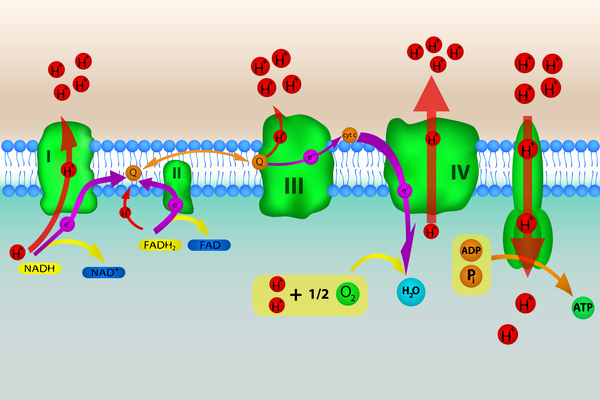 within mitochondria called oxidative phosphorylation to convert the energy in food into a form that cells can use. Proteins that contain Fe-S clusters are involved in many functions in the body, including DNA repair and regulation of gene activity.
Some pathogenic variants in the genes that are associated with multiple mitochondrial dysfunctions syndrome reduce or eliminate the production of the affected protein, while other pathogenic variants prevent the protein from entering the mitochondria. This impairs the process of Fe-S cluster formation or attaching the clusters to proteins. Without Fe-S clusters, certain proteins cannot function normally. This reduces the amount of energy produced by mitochondria, contributing to the severe signs and symptoms seen in people with multiple mitochondrial dysfunctions syndrome.
Inheritance
All types of multiple mitochondrial dysfunctions syndrome are inherited in an autosomal recessive pattern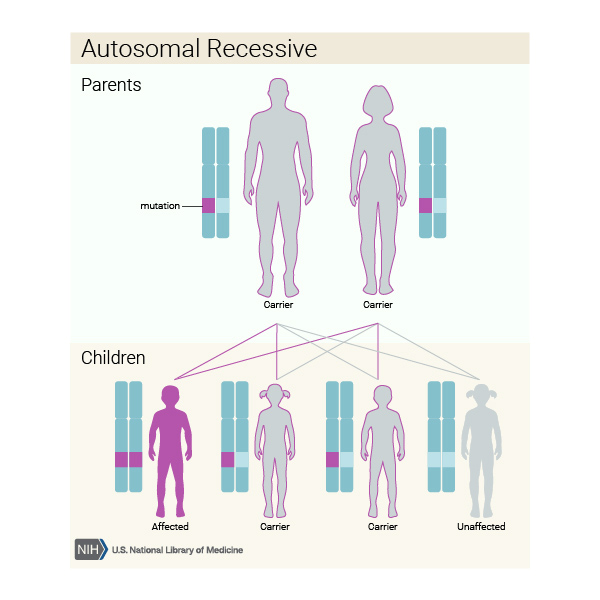 , which means both copies of the gene in each cell must have a pathogenic variant to cause the disorder. The parents of an individual with an autosomal recessive condition each carry one copy of the altered gene, but they typically do not show signs and symptoms of the condition.
Other Names for This Condition
- MMDS
- Multiple mitochondrial dysfunction syndrome
Additional Information & Resources
Genetic Testing Information
- Genetic Testing Registry: Multiple mitochondrial dysfunctions syndrome 1

- Genetic Testing Registry: Multiple mitochondrial dysfunctions syndrome 2
- Genetic Testing Registry: Multiple mitochondrial dysfunctions syndrome 3
- Genetic Testing Registry: Multiple mitochondrial dysfunctions syndrome 4
- Genetic Testing Registry: MULTIPLE MITOCHONDRIAL DYSFUNCTIONS SYNDROME 5
Genetic and Rare Diseases Information Center
Patient Support and Advocacy Resources
Clinical Trials
Catalog of Genes and Diseases from OMIM
Scientific Articles on PubMed
References
- Al-Hassnan ZN, Kaya N. ISCA2-Related Mitochondrial Disorder. 2018 Feb 22. In: Adam MP, Bick S, Mirzaa GM, Wallace SE, Amemiya A, editors. GeneReviews(R) [Internet]. Seattle (WA): University of Washington, Seattle; 1993-2026. Available from http://www.ncbi.nlm.nih.gov/books/NBK481904/ Citation on PubMed
- Cameron JM, Janer A, Levandovskiy V, Mackay N, Rouault TA, Tong WH, Ogilvie I, Shoubridge EA, Robinson BH. Mutations in iron-sulfur cluster scaffold genes NFU1 and BOLA3 cause a fatal deficiency of multiple respiratory chain and 2-oxoacid dehydrogenase enzymes. Am J Hum Genet. 2011 Oct 7;89(4):486-95. doi: 10.1016/j.ajhg.2011.08.011. Epub 2011 Sep 22. Citation on PubMed or Free article on PubMed Central
- Camponeschi F, Ciofi-Baffoni S, Calderone V, Banci L. Molecular Basis of Rare Diseases Associated to the Maturation of Mitochondrial [4Fe-4S]-Containing Proteins. Biomolecules. 2022 Jul 21;12(7):1009. doi: 10.3390/biom12071009. Citation on PubMed
- Haack TB, Rolinski B, Haberberger B, Zimmermann F, Schum J, Strecker V, Graf E, Athing U, Hoppen T, Wittig I, Sperl W, Freisinger P, Mayr JA, Strom TM, Meitinger T, Prokisch H. Homozygous missense mutation in BOLA3 causes multiple mitochondrial dysfunctions syndrome in two siblings. J Inherit Metab Dis. 2013 Jan;36(1):55-62. doi: 10.1007/s10545-012-9489-7. Epub 2012 May 5. Citation on PubMed
- Kaiyrzhanov R, Zaki MS, Lau T, Sen S, Azizimalamiri R, Zamani M, Sayin GY, Hilander T, Efthymiou S, Chelban V, Brown R, Thompson K, Scarano MI, Ganesh J, Koneev K, Gulacar IM, Person R, Sadykova D, Maidyrov Y, Seifi T, Zadagali A, Bernard G, Allis K, Elloumi HZ, Lindy A, Taghiabadi E, Verma S, Logan R, Kirmse B, Bai R, Khalaf SM, Abdel-Hamid MS, Sedaghat A, Shariati G, Issa M, Zeighami J, Elbendary HM, Brown G, Taylor RW, Galehdari H, Gleeson JJ, Carroll CJ, Cowan JA, Moreno-De-Luca A, Houlden H, Maroofian R. Phenotypic continuum of NFU1-related disorders. Ann Clin Transl Neurol. 2022 Dec;9(12):2025-2035. doi: 10.1002/acn3.51679. Epub 2022 Oct 18. Citation on PubMed
- Lebigot E, Schiff M, Golinelli-Cohen MP. A Review of Multiple Mitochondrial Dysfunction Syndromes, Syndromes Associated with Defective Fe-S Protein Maturation. Biomedicines. 2021 Aug 10;9(8):989. doi: 10.3390/biomedicines9080989. Citation on PubMed
- Lill R, Freibert SA. Mechanisms of Mitochondrial Iron-Sulfur Protein Biogenesis. Annu Rev Biochem. 2020 Jun 20;89:471-499. doi: 10.1146/annurev-biochem-013118-111540. Epub 2020 Jan 14. Citation on PubMed
- Navarro-Sastre A, Tort F, Stehling O, Uzarska MA, Arranz JA, Del Toro M, Labayru MT, Landa J, Font A, Garcia-Villoria J, Merinero B, Ugarte M, Gutierrez-Solana LG, Campistol J, Garcia-Cazorla A, Vaquerizo J, Riudor E, Briones P, Elpeleg O, Ribes A, Lill R. A fatal mitochondrial disease is associated with defective NFU1 function in the maturation of a subset of mitochondrial Fe-S proteins. Am J Hum Genet. 2011 Nov 11;89(5):656-67. doi: 10.1016/j.ajhg.2011.10.005. Citation on PubMed or Free article on PubMed Central
- Seyda A, Newbold RF, Hudson TJ, Verner A, MacKay N, Winter S, Feigenbaum A, Malaney S, Gonzalez-Halphen D, Cuthbert AP, Robinson BH. A novel syndrome affecting multiple mitochondrial functions, located by microcell-mediated transfer to chromosome 2p14-2p13. Am J Hum Genet. 2001 Feb;68(2):386-96. doi: 10.1086/318196. Epub 2001 Jan 10. Citation on PubMed or Free article on PubMed Central
- Shukla A, Narayanan DL, Kaur P, Girisha KM. ISCA1-Related Multiple Mitochondrial Dysfunctions Syndrome. 2019 Oct 3. In: Adam MP, Bick S, Mirzaa GM, Wallace SE, Amemiya A, editors. GeneReviews(R) [Internet]. Seattle (WA): University of Washington, Seattle; 1993-2026. Available from http://www.ncbi.nlm.nih.gov/books/NBK547304/ Citation on PubMed
- Zhong H, Janer A, Khalimonchuk O, Antonicka H, Shoubridge EA, Barrientos A. BOLA3 and NFU1 link mitoribosome iron-sulfur cluster assembly to multiple mitochondrial dysfunctions syndrome. Nucleic Acids Res. 2023 Nov 27;51(21):11797-11812. doi: 10.1093/nar/gkad842. Citation on PubMed
The information on this site should not be used as a substitute for professional medical care or advice. Contact a health care provider if you have questions about your health.