



Description
Leber congenital amaurosis and early-onset severe retinal dystrophy (EOSRD) are part of a spectrum of inherited diseases that are characterized by severe visual impairment that occurs early in life. Leber congenital amaurosis typically refers to vision loss that occurs during the first year of life, while EOSRD typically refers to vision loss that occurs between the ages of 1 and 5 years. The word "amaurosis" comes from the Greek word for darkness and represents the severe vision loss that is associated with this condition. The visual impairment in people with Leber congenital amaurosis may worsen over time, depending on the specific underlying cause.
There are many types of Leber congenital amaurosis. This group of disorders primarily affects the specialized tissue at the back of the eye that detects light and color (retina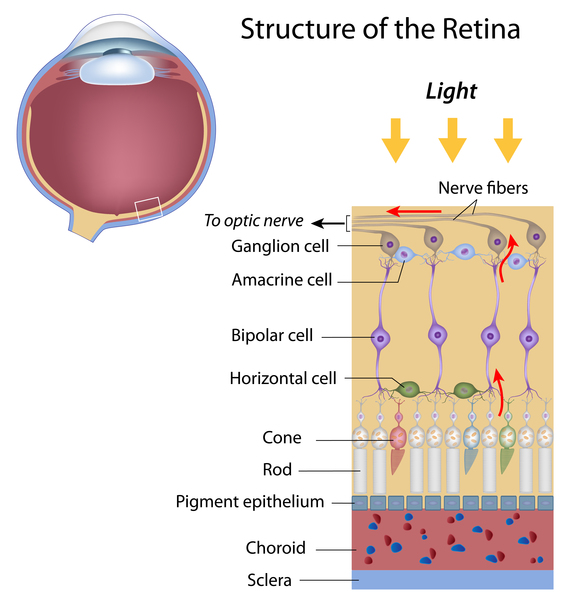 ). Although cases of Leber congenital amaurosis are rare, this group of disorders is among the leading genetic causes of severe vision loss in infants and is one of the most severe forms of inherited retinal disease.
Children with Leber congenital amaurosis often have additional vision problems, which can include an increased sensitivity to light (photophobia), involuntary movements of the eyes (nystagmus), and extreme farsightedness (hyperopia)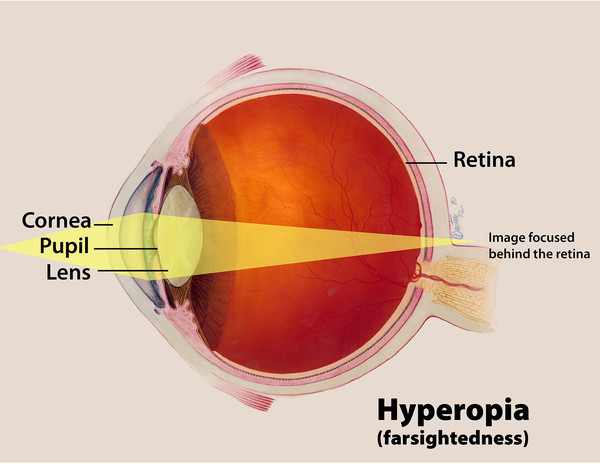 . In many affected individuals, the pupils, which usually expand and contract in response to the amount of light entering the eye, do not react normally to light. Instead, they expand and contract more slowly than normal, or they may not respond to light at all. Some children may also develop strabismus, which is a condition in which the eyes do not point in the same direction (misalignment). A form of strabismus in which one or both eyes turn inward (esotropia) is the most common type seen in children with Leber congenital amaurosis.
A specific behavior called Franceschetti's oculo-digital sign is a characteristic feature of Leber congenital amaurosis. This sign consists of individuals poking, pressing, and rubbing their eyes with a knuckle or finger. Poking the eyes often results in the sensation of flashes of light called phosphenes. Researchers suspect that this behavior may contribute to the appearance of deep-set eyes in affected children. Repeated eye rubbing or pressing may also increase the risk of developing keratoconus, a condition in which the clear front surface of the eye (cornea) becomes thinner and bulges outward. This can lead to blurred or distorted vision. As a result, frequent eye rubbing may be discouraged.
Children with Leber congenital amaurosis may benefit from early intervention programs and educational opportunities that are designed for children with visual impairment. These programs may help prevent the learning delays that can accompany vision loss.
When Leber congenital amaurosis occurs without additional signs and symptoms, it is called nonsyndromic Leber congenital amaurosis. Because signs and symptoms that are similar to those seen in people with Leber congenital amaurosis can also occur as part of a syndrome that affects other organs and tissues in the body, performing a careful clinical evaluation is an important part of the diagnostic process.
Frequency
Leber congenital amaurosis occurs in two to three in 100,000 newborns.
Causes
Genetic changes that cause disease are called pathogenic variants. Pathogenic variants in one of over 20 different genes can cause Leber congenital amaurosis. These genes are all necessary for normal vision and play a variety of roles in the development and function of the retina. For example, some of the genes that are associated with this disorder are essential for the normal development of light-sensing cells in the retina called photoreceptors. Other genes are involved in phototransduction, the process by which light entering the eye is converted into electrical signals that are transmitted to the brain. Still other genes play a role in the function of cilia, which are microscopic, finger-like projections that are found in many types of cells, including the retina's photoreceptors. These cilia are required for proper photoreceptor function.
Pathogenic variants in the genes that are associated with Leber congenital amaurosis disrupt the development or function of the retina, resulting in early vision loss. Pathogenic variants in the CEP290, CRB1, GUCY2D, and RPE65 genes are among the most common causes of Leber congenital amaurosis. The CEP290 gene plays a role in the function of cilia, while the CRB1 gene helps with the development of photoreceptor cells. The GUCY2D gene is important for phototransduction. The RPE65 gene plays an important role in the visual cycle, which is the process that helps recycle light-sensitive molecules that are needed for vision.
Despite advances in genetic testing, a pathogenic variant may not be found in 20 to 30 percent of all people with Leber congenital amaurosis. In these cases, the cause of the disorder is unknown.
When Leber congenital amaurosis occurs as part of a genetic syndrome, it is caused by pathogenic variants in the gene that is associated with that syndrome.
Inheritance
Leber congenital amaurosis can be inherited in different ways, depending on the particular gene involved.
The condition is typically inherited in an autosomal recessive pattern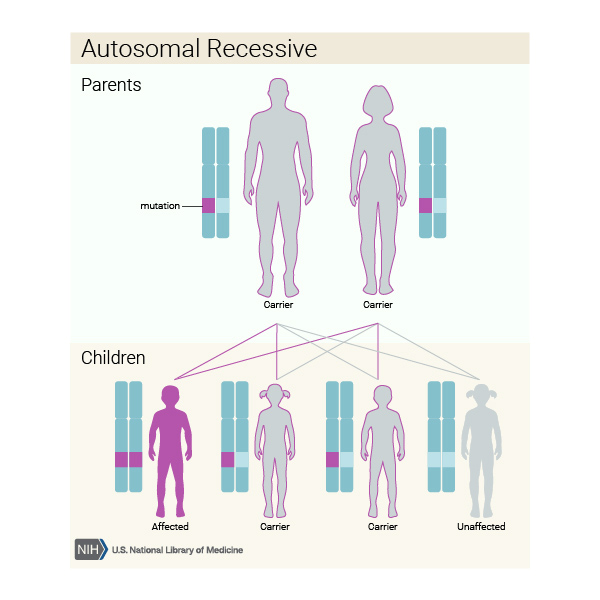 , which means both copies of the gene in each cell must have a pathogenic variant to cause the disorder. The parents of an individual with an autosomal recessive condition each carry one copy of the altered gene, but they typically do not show signs and symptoms of the condition.
In some cases, Leber congenital amaurosis is inherited in an autosomal dominant pattern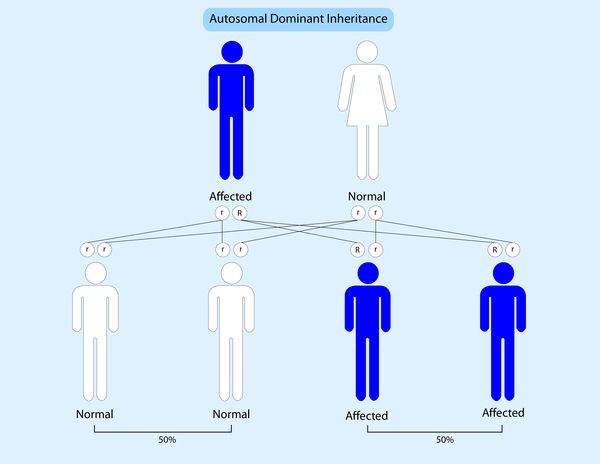 , which means one copy of the altered gene in each cell is sufficient to cause the disorder. In most of these cases, a person with Leber congenital amaurosis inherits the pathogenic variant from a parent. Other cases result from a new (de novo) variant
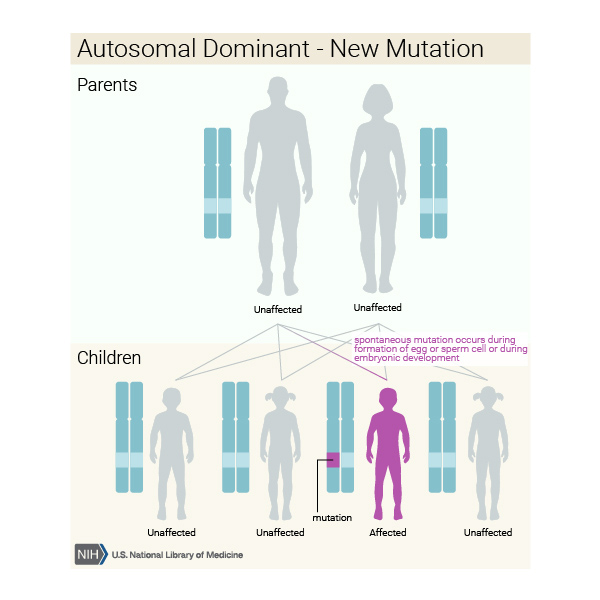 in the gene that occurs during the formation of reproductive cells (eggs or sperm) in an affected individual's parent or during early embryonic development. These affected individuals typically have no history of the disorder in their family.
When Leber congenital amaurosis occurs as part of a syndrome, it follows the inheritance pattern of that syndrome.
Other Names for This Condition
- Amaurosis congenita of Leber
- Congenital retinal blindness
- LCA
- Leber's amaurosis
- Leber's disease
Additional Information & Resources
Genetic Testing Information
- Genetic Testing Registry: Leber congenital amaurosis

- Genetic Testing Registry: Leber congenital amaurosis 1
- Genetic Testing Registry: Leber congenital amaurosis 10
- Genetic Testing Registry: Leber congenital amaurosis 11
- Genetic Testing Registry: Leber congenital amaurosis 12
- Genetic Testing Registry: Leber congenital amaurosis 13
- Genetic Testing Registry: Leber congenital amaurosis 14
- Genetic Testing Registry: Leber congenital amaurosis 15
- Genetic Testing Registry: Leber congenital amaurosis 16
- Genetic Testing Registry: Leber congenital amaurosis 17
- Genetic Testing Registry: Leber congenital amaurosis 18
- Genetic Testing Registry: Leber congenital amaurosis 2
- Genetic Testing Registry: Leber congenital amaurosis 3
- Genetic Testing Registry: Leber congenital amaurosis 4
- Genetic Testing Registry: Leber congenital amaurosis 5
- Genetic Testing Registry: Leber congenital amaurosis 6
- Genetic Testing Registry: Leber congenital amaurosis 7
- Genetic Testing Registry: Leber congenital amaurosis 8
- Genetic Testing Registry: Leber congenital amaurosis 9
Genetic and Rare Diseases Information Center
Patient Support and Advocacy Resources
Clinical Trials
Catalog of Genes and Diseases from OMIM
- LEBER CONGENITAL AMAUROSIS 10; LCA10
- LEBER CONGENITAL AMAUROSIS 11; LCA11
- LEBER CONGENITAL AMAUROSIS 12; LCA12
- LEBER CONGENITAL AMAUROSIS 13; LCA13
- LEBER CONGENITAL AMAUROSIS 14; LCA14
- LEBER CONGENITAL AMAUROSIS 15; LCA15
- LEBER CONGENITAL AMAUROSIS 16; LCA16
- LEBER CONGENITAL AMAUROSIS 17; LCA17
- LEBER CONGENITAL AMAUROSIS 19; LCA19
- LEBER CONGENITAL AMAUROSIS 1; LCA1
- LEBER CONGENITAL AMAUROSIS 2; LCA2
- LEBER CONGENITAL AMAUROSIS 3; LCA3
- LEBER CONGENITAL AMAUROSIS 4; LCA4
- LEBER CONGENITAL AMAUROSIS 5; LCA5
- LEBER CONGENITAL AMAUROSIS 6; LCA6
- LEBER CONGENITAL AMAUROSIS 7; LCA7
- LEBER CONGENITAL AMAUROSIS 8; LCA8
- LEBER CONGENITAL AMAUROSIS 9; LCA9
Scientific Articles on PubMed
References
- Balbirsingh V, Daich Varela M, Michaelides M. Clinical Characteristics of Patients With Less Common Causes of Leber Congenital Amaurosis/Early-Onset Severe Retinal Dystrophy. Am J Ophthalmol. 2025 Aug;276:297-306. doi: 10.1016/j.ajo.2025.04.019. Epub 2025 Apr 26. Citation on PubMed
- den Hollander AI, Roepman R, Koenekoop RK, Cremers FP. Leber congenital amaurosis: genes, proteins and disease mechanisms. Prog Retin Eye Res. 2008 Jul;27(4):391-419. doi: 10.1016/j.preteyeres.2008.05.003. Epub 2008 Jun 1. Citation on PubMed
- Georgiou M, Robson AG, Fujinami K, de Guimaraes TAC, Fujinami-Yokokawa Y, Daich Varela M, Pontikos N, Kalitzeos A, Mahroo OA, Webster AR, Michaelides M. Phenotyping and genotyping inherited retinal diseases: Molecular genetics, clinical and imaging features, and therapeutics of macular dystrophies, cone and cone-rod dystrophies, rod-cone dystrophies, Leber congenital amaurosis, and cone dysfunction syndromes. Prog Retin Eye Res. 2024 May;100:101244. doi: 10.1016/j.preteyeres.2024.101244. Epub 2024 Jan 24. Citation on PubMed
- Hanein S, Perrault I, Gerber S, Tanguy G, Barbet F, Ducroq D, Calvas P, Dollfus H, Hamel C, Lopponen T, Munier F, Santos L, Shalev S, Zafeiriou D, Dufier JL, Munnich A, Rozet JM, Kaplan J. Leber congenital amaurosis: comprehensive survey of the genetic heterogeneity, refinement of the clinical definition, and genotype-phenotype correlations as a strategy for molecular diagnosis. Hum Mutat. 2004 Apr;23(4):306-17. doi: 10.1002/humu.20010. Citation on PubMed
- Huang CH, Yang CM, Yang CH, Hou YC, Chen TC. Leber's Congenital Amaurosis: Current Concepts of Genotype-Phenotype Correlations. Genes (Basel). 2021 Aug 19;12(8):1261. doi: 10.3390/genes12081261. Citation on PubMed
- Koenekoop RK, Cremers FP, den Hollander AI. Leber congenital amaurosis: ciliary proteins on the move. Ophthalmic Genet. 2007 Sep;28(3):111-2. doi: 10.1080/13816810701537457. No abstract available. Citation on PubMed
- Koenekoop RK. An overview of Leber congenital amaurosis: a model to understand human retinal development. Surv Ophthalmol. 2004 Jul-Aug;49(4):379-98. doi: 10.1016/j.survophthal.2004.04.003. Citation on PubMed
- Kumaran N, Moore AT, Weleber RG, Michaelides M. Leber congenital amaurosis/early-onset severe retinal dystrophy: clinical features, molecular genetics and therapeutic interventions. Br J Ophthalmol. 2017 Sep;101(9):1147-1154. doi: 10.1136/bjophthalmol-2016-309975. Epub 2017 Jul 8. Citation on PubMed
- Kumaran N, Pennesi ME, Yang P, Trzupek KM, Michaelides M. Nonsyndromic Leber Congenital Amaurosis / Early-Onset Severe Retinal Dystrophy Overview. 2018 Oct 4 [updated 2025 Dec 4]. In: Adam MP, Bick S, Mirzaa GM, Wallace SE, Amemiya A, editors. GeneReviews(R) [Internet]. Seattle (WA): University of Washington, Seattle; 1993-2026. Available from http://www.ncbi.nlm.nih.gov/books/NBK531510/ Citation on PubMed
- Leroy BP, Birch DG, Duncan JL, Lam BL, Koenekoop RK, Porto FBO, Russell SR, Girach A. LEBER CONGENITAL AMAUROSIS DUE TO CEP290 MUTATIONS-SEVERE VISION IMPAIRMENT WITH A HIGH UNMET MEDICAL NEED: A Review. Retina. 2021 May 1;41(5):898-907. doi: 10.1097/IAE.0000000000003133. Citation on PubMed
- Maguire AM, Simonelli F, Pierce EA, Pugh EN Jr, Mingozzi F, Bennicelli J, Banfi S, Marshall KA, Testa F, Surace EM, Rossi S, Lyubarsky A, Arruda VR, Konkle B, Stone E, Sun J, Jacobs J, Dell'Osso L, Hertle R, Ma JX, Redmond TM, Zhu X, Hauck B, Zelenaia O, Shindler KS, Maguire MG, Wright JF, Volpe NJ, McDonnell JW, Auricchio A, High KA, Bennett J. Safety and efficacy of gene transfer for Leber's congenital amaurosis. N Engl J Med. 2008 May 22;358(21):2240-8. doi: 10.1056/NEJMoa0802315. Epub 2008 Apr 27. Citation on PubMed or Free article on PubMed Central
- Napier MP, Selvan K, Hayeems RZ, Shuman C, Chitayat D, Sutherland JE, Day MA, Heon E. Gene therapy: perspectives from young adults with Leber's congenital amaurosis. Eye (Lond). 2022 Nov;36(11):2088-2093. doi: 10.1038/s41433-021-01763-z. Epub 2021 Sep 16. Citation on PubMed
- Tsang SH, Sharma T. Leber Congenital Amaurosis. Adv Exp Med Biol. 2025;1467:143-149. doi: 10.1007/978-3-031-72230-1_26. Citation on PubMed
The information on this site should not be used as a substitute for professional medical care or advice. Contact a health care provider if you have questions about your health.