



Description
Autosomal dominant tubulointerstitial kidney disease-MUC1 (ADTKD-MUC1) is part of a group of inherited disorders (collectively called autosomal dominant tubulointerstitial kidney disease or ADTKD) that cause a slow loss of kidney function. People with ADTKD-MUC1 eventually develop kidney failure and need either dialysis to remove waste from the blood or a kidney transplant.
ADTKD-MUC1 causes kidney disease by impairing the kidneys' ability to filter waste products 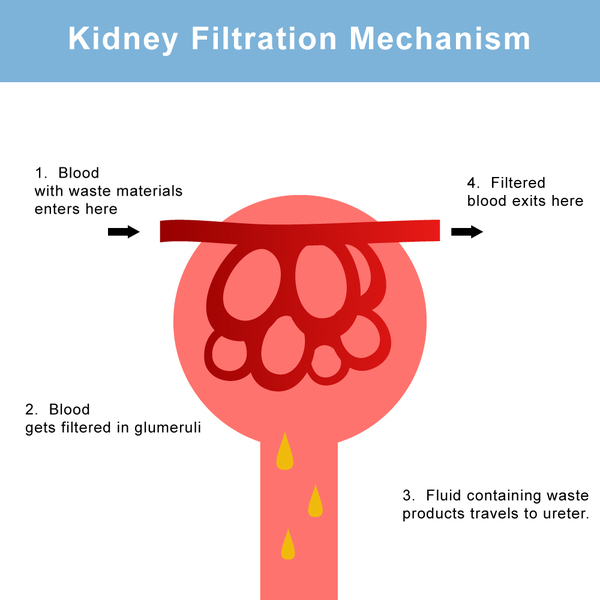 from the body and reabsorb nutrients back into the blood. Over time, this leads to kidney failure, which typically develops during mid-adulthood. However, the age at which kidney failure develops can vary greatly, even among members of the same family.
For people with ADTKD-MUC1, laboratory tests typically begin to indicate reduced kidney function in their late teens or early twenties. Unlike many other people with kidney disease, people with ADTKD-MUC1 typically do not have blood or protein in their urine. However, the initial signs of ADTKD-MUC1 can include:
- Increasing blood levels of creatinine, which is a waste product that is created when muscle tissue naturally breaks down
- Decreasing estimated glomerular filtration rate (eGFR), which is a measure of how well the kidneys are working
As ADTKD-MUC1 progresses, features of chronic kidney disease may appear:
- High blood pressure (hypertension)
- A low number of healthy red blood cells (anemia)
- High levels of a waste product called uric acid in the blood (hyperuricemia)
- A form of arthritis caused by a buildup of uric acid crystals in the joints (gout)
Occasionally, people with ADTKD-MUC1 have medullary cysts, which are fluid-filled pockets in the kidney that can be seen on an ultrasound or CT scan.
Frequency
ADTKD is the third most common genetic kidney disease. However, it is difficult to determine exactly how many people have ADTKD-MUC1. Because specialized genetic testing is required to diagnose ADTKD-MUC1, it is likely that many people who have this condition have not received a diagnosis.
Causes
ADTKD-MUC1 is typically caused by a small change in the MUC1 gene. This gene normally provides instructions for making a protein called mucin-1, which is one of several proteins that make up mucus. Mucus is a slippery substance that lubricates the lining of many organs and tissues, including those in the airways, digestive system, and the reproductive system. Within mucous, mucin-1 protects cells from foreign invaders and other particles. Studies suggest that mucin-1 in the airways may help protect against certain viral infections.
ADTKD-MUC1 is typically caused by the insertion of a single DNA building block (nucleotide) into the MUC1 gene. This change causes cells to produce an abnormal version of the protein, which builds up and causes kidney cells to die early. The loss of kidney cells over time leads to the chronic kidney disease and kidney failure seen in people with ADTKD-MUC1.
Because people with ADTKD-MUCI have only one working copy of the MUC1 gene in each cell, they produce less mucin-1. Studies suggest that low levels of mucin-1 may increase the risk of certain viral infections in people with ADTKD-MUC1.
Inheritance
As its name suggests, ADTKD-MUC1 is inherited in an autosomal dominant pattern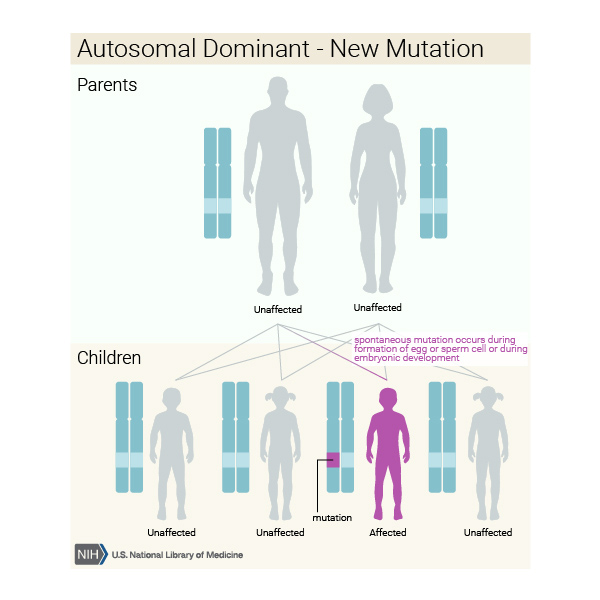 , which means one copy of the altered gene in each cell is sufficient to cause the disorder.
In most cases, an affected individual inherits the altered gene from a parent. However, the altered gene can also result from a new (de novo) variant in the gene that occurs during the formation of reproductive cells (eggs or sperm) in an affected individual's parent or during early embryonic development. These affected individuals typically have no history of the disorder in their family.
Other Names for This Condition
- ADTKD-MUC1
- Autosomal dominant interstitial kidney disease
- Autosomal dominant medullary cystic kidney disease
- MCKD1
- Medullary cystic kidney disease type 1
- MUC1 kidney disease
- MUC1-related medullary cystic kidney disease
- MUCI-related ADTKD
- Polycystic kidneys, medullary type
Additional Information & Resources
Genetic Testing Information

Genetic and Rare Diseases Information Center
Patient Support and Advocacy Resources
Clinical Trials
Catalog of Genes and Diseases from OMIM
Scientific Articles on PubMed
References
- Bleyer AJ, Kidd KO, Zivna M, Kmoch S. Autosomal Dominant Tubulointerstitial Kidney Disease: A Review. Am J Kidney Dis. 2025 Nov;86(5):677-689. doi: 10.1053/j.ajkd.2025.05.015. Epub 2025 Aug 18. Citation on PubMed
- Bleyer AJ, Zivna M, Kidd K, Kmoch S. Autosomal Dominant Tubulointerstitial Kidney Disease - MUC1. 2013 Aug 15 [updated 2021 Oct 21]. In: Adam MP, Bick S, Mirzaa GM, Wallace SE, Amemiya A, editors. GeneReviews(R) [Internet]. Seattle (WA): University of Washington, Seattle; 1993-2026. Available from http://www.ncbi.nlm.nih.gov/books/NBK153723/ Citation on PubMed
- Kidd KO, Williams AH, Taylor A, Martin L, Robins V, Sayer JA, Olinger E, Mabillard HR, Papagregoriou G, Deltas C, Stavrou C, Conlon PJ, Hogan RE, Elhassan EAE, Springer D, Zima T, Izzi C, Vrbacka A, Piherova L, Pohludka M, Radina M, Vylet'al P, Hodanova K, Zivna M, Kmoch S, Bleyer AJ Sr. Eight-fold increased COVID-19 mortality in autosomal dominant tubulointerstitial kidney disease due to MUC1 mutations: an observational study. BMC Nephrol. 2024 Dec 18;25(1):449. doi: 10.1186/s12882-024-03896-1. Citation on PubMed
- Kirby A, Gnirke A, Jaffe DB, Baresova V, Pochet N, Blumenstiel B, Ye C, Aird D, Stevens C, Robinson JT, Cabili MN, Gat-Viks I, Kelliher E, Daza R, DeFelice M, Hulkova H, Sovova J, Vylet'al P, Antignac C, Guttman M, Handsaker RE, Perrin D, Steelman S, Sigurdsson S, Scheinman SJ, Sougnez C, Cibulskis K, Parkin M, Green T, Rossin E, Zody MC, Xavier RJ, Pollak MR, Alper SL, Lindblad-Toh K, Gabriel S, Hart PS, Regev A, Nusbaum C, Kmoch S, Bleyer AJ, Lander ES, Daly MJ. Mutations causing medullary cystic kidney disease type 1 lie in a large VNTR in MUC1 missed by massively parallel sequencing. Nat Genet. 2013 Mar;45(3):299-303. doi: 10.1038/ng.2543. Epub 2013 Feb 10. Citation on PubMed or Free article on PubMed Central
- Kiser RL, Wolf MT, Martin JL, Zalewski I, Attanasio M, Hildebrandt F, Klemmer P. Medullary cystic kidney disease type 1 in a large Native-American kindred. Am J Kidney Dis. 2004 Oct;44(4):611-7. Citation on PubMed
- Olinger E, Hofmann P, Kidd K, Dufour I, Belge H, Schaeffer C, Kipp A, Bonny O, Deltas C, Demoulin N, Fehr T, Fuster DG, Gale DP, Goffin E, Hodanova K, Huynh-Do U, Kistler A, Morelle J, Papagregoriou G, Pirson Y, Sandford R, Sayer JA, Torra R, Venzin C, Venzin R, Vogt B, Zivna M, Greka A, Dahan K, Rampoldi L, Kmoch S, Bleyer AJ Sr, Devuyst O. Clinical and genetic spectra of autosomal dominant tubulointerstitial kidney disease due to mutations in UMOD and MUC1. Kidney Int. 2020 Sep;98(3):717-731. doi: 10.1016/j.kint.2020.04.038. Epub 2020 May 22. Citation on PubMed
- Stavrou C, Koptides M, Tombazos C, Psara E, Patsias C, Zouvani I, Kyriacou K, Hildebrandt F, Christofides T, Pierides A, Deltas CC. Autosomal-dominant medullary cystic kidney disease type 1: clinical and molecular findings in six large Cypriot families. Kidney Int. 2002 Oct;62(4):1385-94. doi: 10.1111/j.1523-1755.2002.kid581.x. Citation on PubMed
The information on this site should not be used as a substitute for professional medical care or advice. Contact a health care provider if you have questions about your health.