



Description
Vitamin D-dependent rickets is a group of disorders that are characterized by soft, weak bones (rickets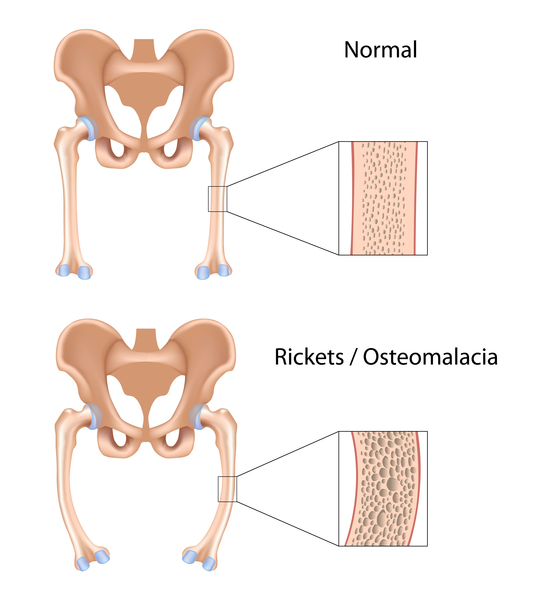 ). In people with these conditions, the process by which minerals are deposited into developing bones (mineralization) is disrupted. The long bones in the arms and legs are particularly affected. People with vitamin D-dependent rickets have problems using vitamin D, which helps maintain the proper levels of calcium and phosphate in the blood. These minerals are needed for the normal development of strong bones and teeth.
There are several forms of vitamin D-dependent rickets: type 1A (VDDR1A), type 1B (VDDR1B), type 2A (VDDR2A), type 2B (VDDR2B), and type 3 (VDDR3). The types are distinguished by their genetic cause.
The signs and symptoms of vitamin D-dependent rickets often begin in infancy. Infants with vitamin D-dependent rickets may have weak muscle tone (hypotonia) and not grow or gain weight at the expected rate (faltering weight). When affected children begin to walk, they may develop abnormally curved (bowed) legs because the bones are too weak to bear weight. The weakened bones are often painful and are prone to fractures. Bone growth is often delayed, and affected individuals may be shorter than their peers. Additional skeletal features include enlargement of the skull, the wrists, and the ends of the ribs.
Affected individuals may also have dental abnormalities, such as delayed tooth formation and thin tooth enamel. Some people with vitamin D-dependent rickets who have very low levels of calcium in the blood can have muscle cramps, tingling sensations (paresthesias), or seizures. Hair loss (alopecia) has been reported in some individuals with VDDR2A.
With early treatment, affected individuals may have less-severe skeletal signs and symptoms and fewer long-term health issues. Unlike with some other forms of rickets, vitamin D-dependent rickets cannot be treated with standard doses of vitamin D.
Frequency
The prevalence of vitamin D-dependent rickets is unknown. The most common form of rickets, which is caused by a lack of vitamin D in the diet or insufficient sun exposure, affects approximately 24 in 100,000 people in the United States each year. Genetic forms of rickets, including vitamin D-dependent rickets, are much less common.
Causes
Genetic changes that cause disease are called pathogenic variants. Pathogenic variants in one of several different genes can cause vitamin D-dependent rickets. These genes provide instructions for making proteins that help the body use vitamin D. Vitamin D can be obtained from food or made in the skin after exposure to the sun or to light from certain other sources, such as tanning beds. This important vitamin helps maintain the proper balance of calcium and phosphate, which are needed for muscle function, nerve cell communication, and bone mineralization. Vitamin D must undergo two biochemical reactions in the body to become fully active. The fully active form of vitamin D is called calcitriol.
Pathogenic variants in the CYP27B1, CYP2R1 and VDR genes cause most cases of vitamin D-dependent rickets. The CYP27B1 and CYP2R1 genes provide instructions for making enzymes that help convert vitamin D to calcitriol. Calcitriol binds to vitamin D receptors, which are produced from the VDR gene and are present in most cells of the body. The resulting complex then binds to DNA and regulates the activity of the genes that are involved in maintaining the proper levels of calcium and phosphate in the blood. This is essential for the normal formation of bones and teeth. One of vitamin D's major roles is to help regulate the absorption of calcium and phosphate from the intestines into the bloodstream.
Pathogenic variants in the CYP27B1 gene cause VDDR1A, while pathogenic variants in the CYP2R1 gene cause VDDR1B. These variants can reduce or eliminate enzyme activity, which impairs the conversion of vitamin D to calcitriol. When less calcitriol is available, genes involved in calcium regulation are not properly activated.
Pathogenic variants in the VDR gene cause VDDR2A. These variants lead to changes in the VDR protein that can prevent the receptor from properly interacting with calcitriol or DNA. As a result, the activity of genes involved in calcium regulation is impaired, even with normal amounts of calcitriol in the body.
In people with vitamin D-dependent rickets, the inability to properly regulate calcium also impairs the regulation of phosphate. As a result, the body does not obtain these minerals from food when needed, leading to low blood levels of calcium (hypocalcemia) and phosphate (hypophosphatemia). Hypocalcemia and hypophosphatemia disrupt the process of mineralization, especially in the long bones of the arms and legs. This leads to the soft, weak bones seen in people with vitamin D-dependent rickets. Hypocalcemia can also contribute to the muscle weakness and seizures seen in some affected individuals.
Pathogenic variants in other genes cause other types of vitamin D-dependent rickets.
Inheritance
Vitamin D-dependent rickets types VDDR1A, VDDR1B, and VDDR2A are usually inherited in an autosomal recessive pattern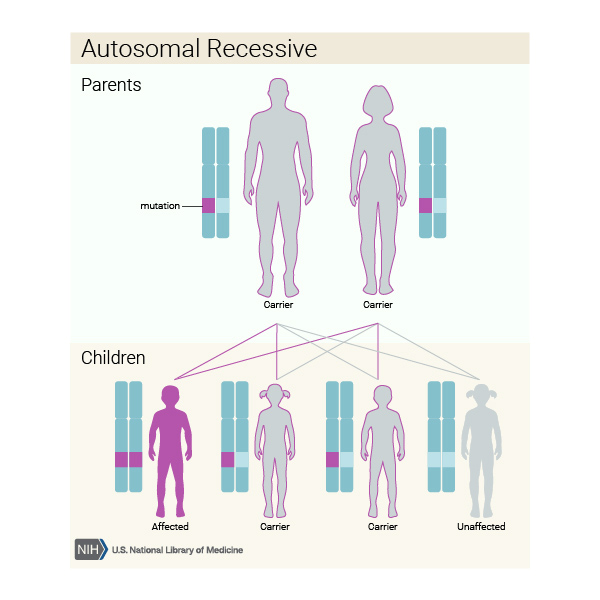 , which means both copies of the gene in each cell must have a pathogenic variant to cause the disorder. The parents of an individual with an autosomal recessive condition each carry one copy of the altered gene, but they typically do not show signs and symptoms of the condition.
VDDR3 is typically inherited in an autosomal dominant pattern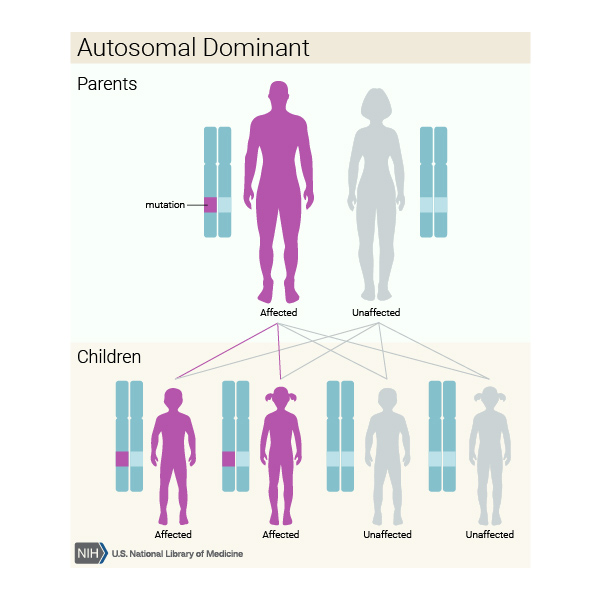 , which means one copy of the altered gene in each cell is sufficient to cause the disorder.
Some individuals with a pathogenic variant in one copy of the CYP2R1 gene have mild signs and symptoms of vitamin D-dependent rickets, while individuals with a pathogenic variant in both copies of the CYP2R1 gene tend to have the typical signs and symptoms of VDDR1B. This inheritance pattern is known as incomplete autosomal dominance.
Other Names for This Condition
- Hereditary vitamin D-resistant ricket
- HVDRR
- VDDR
Additional Information & Resources
Genetic Testing Information
- Genetic Testing Registry: Vitamin D-dependent rickets

- Genetic Testing Registry: Vitamin D-dependent rickets type II with alopecia
- Genetic Testing Registry: Vitamin D-dependent rickets, type 1A
- Genetic Testing Registry: Vitamin D-dependent rickets, type 2
- Genetic Testing Registry: Vitamin D-dependent rickets, type 2B
- Genetic Testing Registry: Vitamin D-dependent rickets, type 3
- Genetic Testing Registry: Vitamin D-dependent rickets, type 1
Genetic and Rare Diseases Information Center
Patient Support and Advocacy Resources
Catalog of Genes and Diseases from OMIM
Scientific Articles on PubMed
References
- Chanchlani R, Nemer P, Sinha R, Nemer L, Krishnappa V, Sochett E, Safadi F, Raina R. An Overview of Rickets in Children. Kidney Int Rep. 2020 Apr 11;5(7):980-990. doi: 10.1016/j.ekir.2020.03.025. eCollection 2020 Jul. Citation on PubMed
- Dahash BA, Sankararaman S. Rickets. 2023 Aug 7. In: StatPearls [Internet]. Treasure Island (FL): StatPearls Publishing; 2023 Jan-. Available from http://www.ncbi.nlm.nih.gov/books/NBK562285/ Citation on PubMed
- Feldman D, J Malloy P. Mutations in the vitamin D receptor and hereditary vitamin D-resistant rickets. Bonekey Rep. 2014 Mar 5;3:510. doi: 10.1038/bonekey.2014.5. eCollection 2014. Citation on PubMed or Free article on PubMed Central
- Gentile C, Chiarelli F. Rickets in Children: An Update. Biomedicines. 2021 Jun 27;9(7):738. doi: 10.3390/biomedicines9070738. Citation on PubMed
- Haffner D, Leifheit-Nestler M, Grund A, Schnabel D. Rickets guidance: part I-diagnostic workup. Pediatr Nephrol. 2022 Sep;37(9):2013-2036. doi: 10.1007/s00467-021-05328-w. Epub 2021 Dec 15. Citation on PubMed
- Levine MA. Diagnosis and Management of Vitamin D Dependent Rickets. Front Pediatr. 2020 Jun 12;8:315. doi: 10.3389/fped.2020.00315. eCollection 2020. Citation on PubMed
- Malloy PJ, Feldman D. The role of vitamin D receptor mutations in the development of alopecia. Mol Cell Endocrinol. 2011 Dec 5;347(1-2):90-6. doi: 10.1016/j.mce.2011.05.045. Epub 2011 Jun 13. Citation on PubMed or Free article on PubMed Central
- Malloy PJ, Tasic V, Taha D, Tutunculer F, Ying GS, Yin LK, Wang J, Feldman D. Vitamin D receptor mutations in patients with hereditary 1,25-dihydroxyvitamin D-resistant rickets. Mol Genet Metab. 2014 Jan;111(1):33-40. doi: 10.1016/j.ymgme.2013.10.014. Epub 2013 Nov 4. Citation on PubMed or Free article on PubMed Central
- Mantoanelli L, de Almeida CM, Coelho MCA, Coutinho M, Levine MA, Collett-Solberg PF, Bordallo AP. Vitamin D-Dependent Rickets Type 3: A Case Report and Systematic Review. Calcif Tissue Int. 2023 Apr;112(4):512-517. doi: 10.1007/s00223-022-01051-2. Epub 2023 Jan 19. Citation on PubMed
- Molin A, Wiedemann A, Demers N, Kaufmann M, Do Cao J, Mainard L, Dousset B, Journeau P, Abeguile G, Coudray N, Mittre H, Richard N, Weryha G, Sorlin A, Jones G, Kottler ML, Feillet F. Vitamin D-Dependent Rickets Type 1B (25-Hydroxylase Deficiency): A Rare Condition or a Misdiagnosed Condition? J Bone Miner Res. 2017 Sep;32(9):1893-1899. doi: 10.1002/jbmr.3181. Epub 2017 Jul 13. Citation on PubMed
- Roizen JD, Li D, O'Lear L, Javaid MK, Shaw NJ, Ebeling PR, Nguyen HH, Rodda CP, Thummel KE, Thacher TD, Hakonarson H, Levine MA. CYP3A4 mutation causes vitamin D-dependent rickets type 3. J Clin Invest. 2018 May 1;128(5):1913-1918. doi: 10.1172/JCI98680. Epub 2018 Apr 3. Citation on PubMed
- Thacher TD, Fischer PR, Singh RJ, Roizen J, Levine MA. CYP2R1 Mutations Impair Generation of 25-hydroxyvitamin D and Cause an Atypical Form of Vitamin D Deficiency. J Clin Endocrinol Metab. 2015 Jul;100(7):E1005-13. doi: 10.1210/jc.2015-1746. Epub 2015 May 5. Citation on PubMed or Free article on PubMed Central
- Unger S, Ferreira CR, Mortier GR, Ali H, Bertola DR, Calder A, Cohn DH, Cormier-Daire V, Girisha KM, Hall C, Krakow D, Makitie O, Mundlos S, Nishimura G, Robertson SP, Savarirayan R, Sillence D, Simon M, Sutton VR, Warman ML, Superti-Furga A. Nosology of genetic skeletal disorders: 2023 revision. Am J Med Genet A. 2023 May;191(5):1164-1209. doi: 10.1002/ajmg.a.63132. Epub 2023 Feb 13. Citation on PubMed
The information on this site should not be used as a substitute for professional medical care or advice. Contact a health care provider if you have questions about your health.