



Description
Tietz syndrome is a disorder that is characterized by profound hearing loss and unusually light-colored skin and hair (hypopigmentation). The hearing loss in affected individuals is caused by abnormalities of the inner ear (sensorineural hearing loss) and is present from birth. Although people with Tietz syndrome are born with white hair and very pale skin, their hair color often changes over time to blond or light red. Affected individuals sunburn very easily, although they may tan slightly or develop reddish freckles with limited sun exposure. Their skin and hair color will remain lighter than those of other members of their family.
Tietz syndrome also affects the eyes. The colored part of the eye (the iris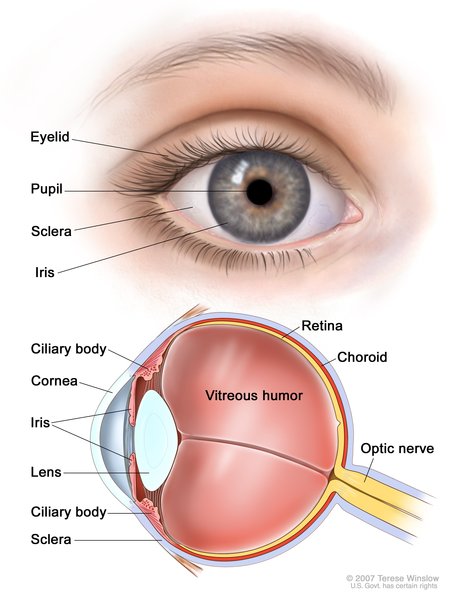 ) in affected individuals is blue or gray. The specialized cells in the eye called retinal pigment epithelial cells lack their normal pigment. The retinal pigment epithelium
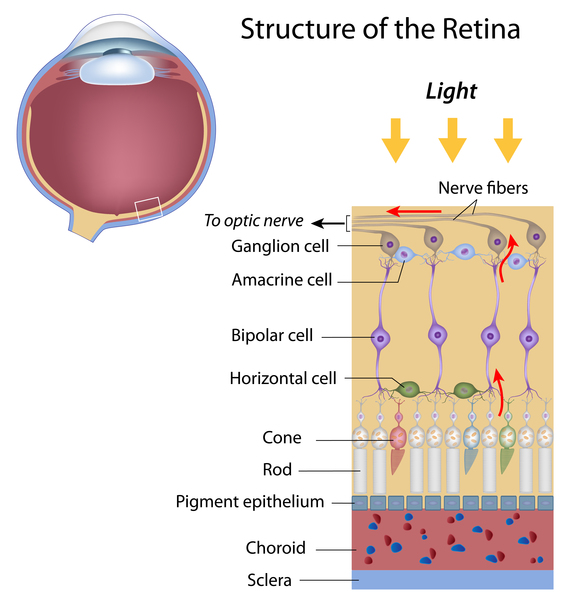 nourishes the retina, the specialized light-sensitive tissue that lines the back of the eye. The changes to the retinal pigment epithelium are only detectable with an eye examination. Some affected individuals have mild vision problems.
Frequency
Tietz syndrome is a very rare disorder, although its exact prevalence is unknown. Only a few affected families have been described in the scientific literature.
Causes
Genetic changes that cause disease are called pathogenic variants. Pathogenic variants in the MITF gene cause Tietz syndrome. The MITF gene provides instructions for making a protein that plays a role in the development, survival, and function of certain types of cells. MITF proteins attach to each other or to other proteins, creating a two-protein unit (dimer). The dimer attaches to specific areas of DNA and helps control the activity of particular genes. Proteins that are involved in controlling gene activity are called transcription factors.
The MITF protein plays a major role in controlling the development and function of pigment-producing cells called melanocytes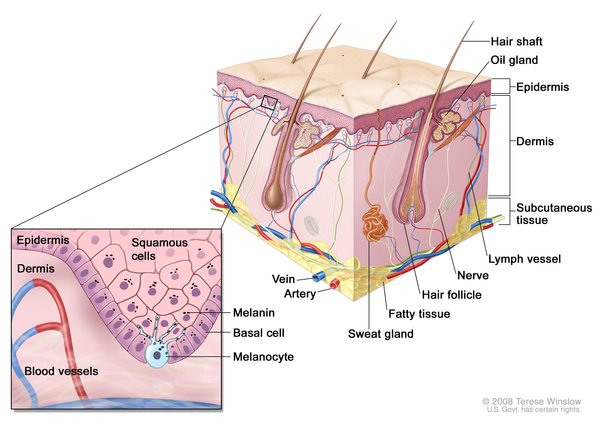 . Within these cells, the MITF protein controls the production of the pigment melanin, which contributes to hair, eye, and skin color. Melanocytes are also found in the inner ear and play an important role in hearing. Additionally, the MITF protein regulates the development of the retinal pigment epithelium in the eyes.
The pathogenic variants in the MITF gene that cause Tietz syndrome lead to the production of an altered protein. Dimers that are made with the abnormal MITF protein cannot bind to DNA. As a result, the activity of the genes that are involved in the development of melanocytes and the production of melanin is impaired. A lack of melanocytes in the inner ear leads to hearing loss. Decreased melanin production causes the light skin and hair color and the retinal pigment epithelium changes that are characteristic of Tietz syndrome.
Researchers suggest that Tietz syndrome may represent a severe form of a disorder called Waardenburg syndrome, which can also be caused by pathogenic variants in the MITF gene.
Inheritance
This condition is inherited in an autosomal dominant pattern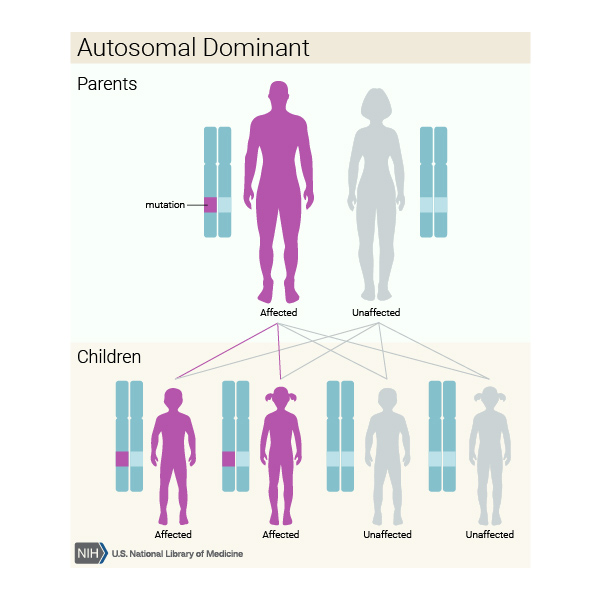 , which means one copy of the altered gene in each cell is sufficient to cause the disorder. In most cases, a person with Tietz syndrome has one parent who also has the condition.
Other Names for This Condition
- Albinism and complete nerve deafness
- Albinism-deafness of Tietz
- Hypopigmentation-deafness syndrome
- Hypopigmentation-hearing loss syndrome
- Hypopigmentation/deafness of Tietz
- TADS
- Tietz albinism-deafness syndrome
- Tietz's syndrome
Additional Information & Resources
Genetic Testing Information

Genetic and Rare Diseases Information Center
Patient Support and Advocacy Resources
Catalog of Genes and Diseases from OMIM
Scientific Articles on PubMed
References
- Centeno PP, Pavet V, Marais R. The journey from melanocytes to melanoma. Nat Rev Cancer. 2023 Jun;23(6):372-390. doi: 10.1038/s41568-023-00565-7. Epub 2023 Apr 24. Citation on PubMed
- Grill C, Bergsteinsdottir K, Ogmundsdottir MH, Pogenberg V, Schepsky A, Wilmanns M, Pingault V, Steingrimsson E. MITF mutations associated with pigment deficiency syndromes and melanoma have different effects on protein function. Hum Mol Genet. 2013 Nov 1;22(21):4357-67. doi: 10.1093/hmg/ddt285. Epub 2013 Jun 20. Citation on PubMed or Free article on PubMed Central
- Izumi K, Kohta T, Kimura Y, Ishida S, Takahashi T, Ishiko A, Kosaki K. Tietz syndrome: unique phenotype specific to mutations of MITF nuclear localization signal. Clin Genet. 2008 Jul;74(1):93-5. doi: 10.1111/j.1399-0004.2008.01010.x. Epub 2008 May 28. No abstract available. Citation on PubMed
- Leger S, Balguerie X, Goldenberg A, Drouin-Garraud V, Cabot A, Amstutz-Montadert I, Young P, Joly P, Bodereau V, Holder-Espinasse M, Jamieson RV, Krause A, Chen H, Baumann C, Nunes L, Dollfus H, Goossens M, Pingault V. Novel and recurrent non-truncating mutations of the MITF basic domain: genotypic and phenotypic variations in Waardenburg and Tietz syndromes. Eur J Hum Genet. 2012 May;20(5):584-7. doi: 10.1038/ejhg.2011.234. Epub 2012 Jan 18. Citation on PubMed or Free article on PubMed Central
- Yamamoto K, Okamura K, Wakamatsu K, Ito S, Akabane K, Arai Y, Kawaguchi J, Hozumi Y, Suzuki T. Genetic insights into Tietz albinism-deafness syndrome: A new dominant-negative mutation in MITF. Pigment Cell Melanoma Res. 2024 Jul;37(4):430-437. doi: 10.1111/pcmr.13166. Epub 2024 Mar 4. Citation on PubMed
The information on this site should not be used as a substitute for professional medical care or advice. Contact a health care provider if you have questions about your health.