



Description
Permanent neonatal diabetes mellitus is a type of diabetes that typically appears within the first 6 months after birth (the neonatal period) and continues throughout life. Diabetes is characterized by high levels of glucose in the blood, also called blood sugar. In infants with permanent neonatal diabetes mellitus, diabetes results from a shortage or absence of the hormone insulin. Insulin is produced by the pancreas. It helps move glucose from the blood into cells, where glucose is converted into energy.
The signs and symptoms of permanent neonatal diabetes mellitus can vary among affected individuals. Infants with this condition typically have abnormally high levels of glucose in the blood, glucose in the urine, severe fluid loss (dehydration), and a history of slow growth before birth (intrauterine growth retardation). After birth, affected infants may also have difficulty gaining weight and growing at the expected rate (faltering weight).
A small number of individuals with permanent neonatal diabetes mellitus have an underdeveloped pancreas. Because the pancreas produces digestive enzymes in addition to insulin, affected individuals may also experience digestive problems, such as fatty stools and an inability to absorb fat-soluble vitamins.
The long-term complications of permanent neonatal diabetes mellitus can include kidney disease and retinopathy, which is damage to the small blood vessels in the specialized light-sensitive tissue that lines the back of the eye (retina). The risk of long-term complications is reduced with proper diabetes management.
Frequency
Approximately 1 in 90,000 to 260,000 infants receive a diagnosis of neonatal diabetes mellitus each year. About half of these babies have permanent neonatal diabetes mellitus.
Causes
Variants (also called mutations) in one of several genes can cause permanent neonatal diabetes mellitus. The signs and symptoms of the condition, the severity of the condition, and the treatment options can vary depending on the particular gene involved. Variants in the KCNJ11, ABCC8, and INS genes are responsible for most cases of permanent neonatal diabetes mellitus.
About 25 percent of individuals with permanent neonatal diabetes mellitus have a variant in the KCNJ11 gene. Variants in the ABCC8 gene cause an additional 10 to 15 percent of cases. These genes provide instructions for making parts (subunits) of the ATP-sensitive potassium (KATP) channels that are found in specialized pancreas cells called beta cells. Each of these KATP channels consists of four subunits that are produced from the KCNJ11 gene and four subunits that are produced from the ABCC8 gene.
These KATP channels span the cell membranes of the beta cells and open and close in response to the amount of glucose in the bloodstream. The KATP channels close when blood glucose levels increase, which triggers the release of insulin from the beta cells into the bloodstream. In this way, the KATP channels help regulate insulin secretion and control blood glucose levels.
The variants in the KCNJ11 or ABCC8 gene that are associated with permanent neonatal diabetes mellitus cause cells to produce proteins that do not function properly. As a result, KATP channels do not close when they should, leading to reduced insulin secretion from the beta cells and impaired blood glucose control.
Variants in the INS gene, which provides instructions for making insulin, have been found in approximately 20 to 25 percent of individuals with permanent neonatal diabetes mellitus. The precursor to insulin is called proinsulin, which consists of a single chain of protein building blocks (amino acids). The proinsulin chain is cut (cleaved) to form individual pieces called A and B chains, which are joined together to form insulin. Variants in the INS gene disrupt the cleavage of proinsulin or the binding of the A and B chains, which reduces the amount of available insulin and leads to impaired blood glucose control.
Gene variants have not been found in all people with permanent neonatal diabetes mellitus. Researchers suspect that other genes may be involved in the development of this condition.
Permanent neonatal diabetes mellitus can also be part of a syndrome that affects multiple parts of the body. When the condition is part of a syndrome, it is caused by variants in the gene associated with that syndrome.
Inheritance
Permanent neonatal diabetes mellitus can have different inheritance patterns depending on the gene involved.
This condition can be inherited in an autosomal dominant pattern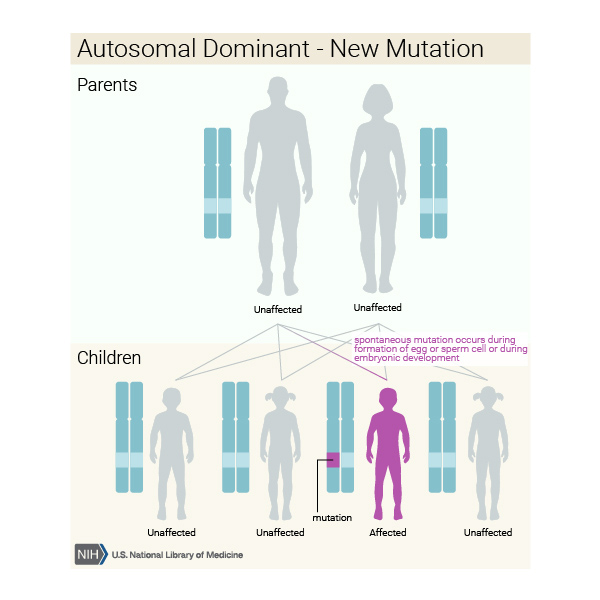 , which means one copy of the altered gene in each cell is sufficient to cause the disorder. Many of these cases result from a new (de novo) variant in the gene that occurs during the formation of reproductive cells (eggs or sperm) in an affected individual's parent or during early embryonic development. These affected individuals have no history of the disorder in their family.
Permanent neonatal diabetes mellitus can also be inherited in an autosomal recessive pattern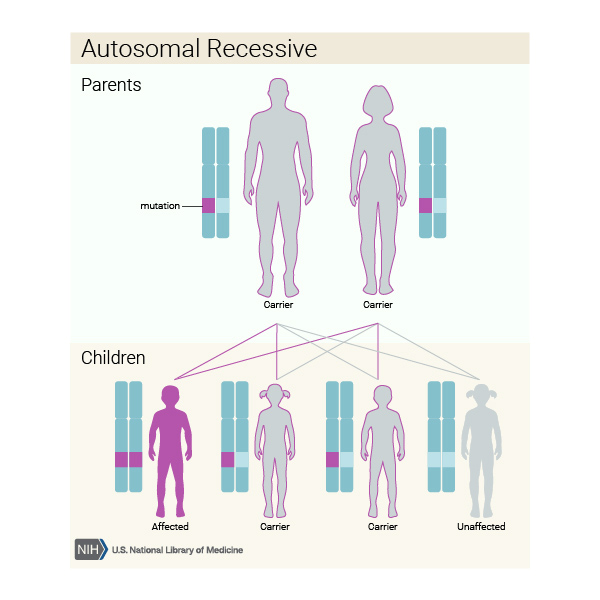 , which means both copies of the gene in each cell must have a variant to cause the disorder. The parents of an individual with an autosomal recessive condition each carry one copy of the altered gene, but they typically do not show signs and symptoms of the condition.
When permanent neonatal diabetes mellitus is part of a syndrome, it follows the inheritance pattern of that syndrome.
Other Names for This Condition
- Isolated permanent neonatal diabetes mellitus
- Isolated PNDM
- Monogenic diabetes of infancy
- PDMI permanent diabetes mellitus of infancy
- PNDM
Additional Information & Resources
Genetic Testing Information
- Genetic Testing Registry: Diabetes mellitus, permanent neonatal 2

- Genetic Testing Registry: Diabetes mellitus, permanent neonatal 3
- Genetic Testing Registry: Diabetes mellitus, permanent neonatal 4
- Genetic Testing Registry: Permanent neonatal diabetes mellitus 1
- Genetic Testing Registry: Pancreatic agenesis 1
- Genetic Testing Registry: Permanent neonatal diabetes mellitus
Genetic and Rare Diseases Information Center
Patient Support and Advocacy Resources
Clinical Trials
Scientific Articles on PubMed
References
- Barbarini DS, Haslinger V, Schmidt K, Patch AM, Muller G, Simma B. Neonatal diabetes mellitus due to pancreas agenesis: a new case report and review of the literature. Pediatr Diabetes. 2009 Nov;10(7):487-91. doi: 10.1111/j.1399-5448.2009.00523.x. Epub 2009 Jun 3. Citation on PubMed
- Dahl A, Kumar S. Recent Advances in Neonatal Diabetes. Diabetes Metab Syndr Obes. 2020 Feb 12;13:355-364. doi: 10.2147/DMSO.S198932. eCollection 2020. Citation on PubMed
- De Leon DD, Pinney SE. Permanent Neonatal Diabetes Mellitus. 2008 Feb 8 [updated 2025 Sep 25]. In: Adam MP, Bick S, Mirzaa GM, Wallace SE, Amemiya A, editors. GeneReviews(R) [Internet]. Seattle (WA): University of Washington, Seattle; 1993-2026. Available from http://www.ncbi.nlm.nih.gov/books/NBK1447/ Citation on PubMed
- Edghill EL, Flanagan SE, Ellard S. Permanent neonatal diabetes due to activating mutations in ABCC8 and KCNJ11. Rev Endocr Metab Disord. 2010 Sep;11(3):193-8. doi: 10.1007/s11154-010-9149-x. Citation on PubMed
- Edghill EL, Flanagan SE, Patch AM, Boustred C, Parrish A, Shields B, Shepherd MH, Hussain K, Kapoor RR, Malecki M, MacDonald MJ, Stoy J, Steiner DF, Philipson LH, Bell GI; Neonatal Diabetes International Collaborative Group; Hattersley AT, Ellard S. Insulin mutation screening in 1,044 patients with diabetes: mutations in the INS gene are a common cause of neonatal diabetes but a rare cause of diabetes diagnosed in childhood or adulthood. Diabetes. 2008 Apr;57(4):1034-42. doi: 10.2337/db07-1405. Epub 2007 Dec 27. Citation on PubMed
- Flanagan SE, Clauin S, Bellanne-Chantelot C, de Lonlay P, Harries LW, Gloyn AL, Ellard S. Update of mutations in the genes encoding the pancreatic beta-cell K(ATP) channel subunits Kir6.2 (KCNJ11) and sulfonylurea receptor 1 (ABCC8) in diabetes mellitus and hyperinsulinism. Hum Mutat. 2009 Feb;30(2):170-80. doi: 10.1002/humu.20838. Citation on PubMed
- Flanagan SE, Edghill EL, Gloyn AL, Ellard S, Hattersley AT. Mutations in KCNJ11, which encodes Kir6.2, are a common cause of diabetes diagnosed in the first 6 months of life, with the phenotype determined by genotype. Diabetologia. 2006 Jun;49(6):1190-7. doi: 10.1007/s00125-006-0246-z. Epub 2006 Apr 12. Citation on PubMed
- Polak M, Cave H. Neonatal diabetes mellitus: a disease linked to multiple mechanisms. Orphanet J Rare Dis. 2007 Mar 9;2:12. doi: 10.1186/1750-1172-2-12. Citation on PubMed or Free article on PubMed Central
- Rubio-Cabezas O, Klupa T, Malecki MT; CEED3 Consortium. Permanent neonatal diabetes mellitus--the importance of diabetes differential diagnosis in neonates and infants. Eur J Clin Invest. 2011 Mar;41(3):323-33. doi: 10.1111/j.1365-2362.2010.02409.x. Epub 2010 Nov 4. Citation on PubMed
- Stoy J, Steiner DF, Park SY, Ye H, Philipson LH, Bell GI. Clinical and molecular genetics of neonatal diabetes due to mutations in the insulin gene. Rev Endocr Metab Disord. 2010 Sep;11(3):205-15. doi: 10.1007/s11154-010-9151-3. Citation on PubMed or Free article on PubMed Central
The information on this site should not be used as a substitute for professional medical care or advice. Contact a health care provider if you have questions about your health.