



Description
Cushing disease is caused by high levels of a hormone called cortisol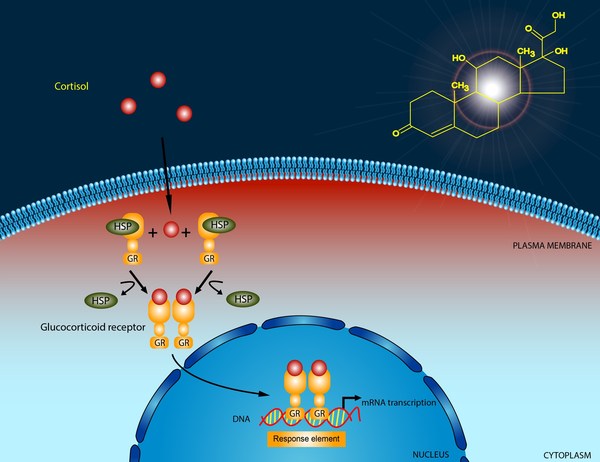 , which leads to a wide variety of signs and symptoms. Cortisol has many functions, which include helping the body respond to stress. Cushing disease is a type of Cushing syndrome. As with Cushing disease, Cushing syndrome is caused by high levels of cortisol in the body. Because both conditions result from elevated cortisol levels, the signs and symptoms seen in people with Cushing disease are similar to those seen in people with Cushing syndrome.
People with Cushing disease may have rapid and unusual weight gain, particularly around the abdomen and face. Affected individuals may bruise easily and have purple stretch marks (striae) on the thighs and abdomen. Individuals with Cushing disease may also develop a hump on their upper back caused by changes in the amount and distribution of body fat.
Additional signs and symptoms of Cushing disease can include muscle weakness, fatigue, irregular menstruation, and thin and brittle bones that are prone to fracture (osteoporosis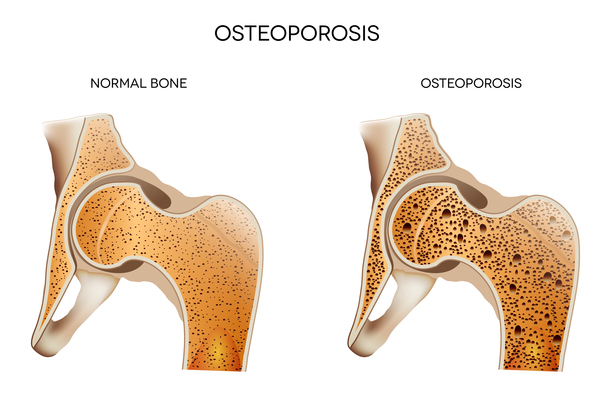 ). Women with Cushing disease often have excessive hair growth (hirsutism) on the face, chest, and abdomen. People with Cushing disease are at increased risk of developing high blood pressure (hypertension) and diabetes. Affected individuals may also have a weakened immune system and an increased risk of infections.
Cushing disease can affect a person's thinking and mood. Affected individuals often report anxiety, irritability, and depression. This condition can also affect learning, concentration, and memory, leading to "brain fog."
People with Cushing disease are at an increased risk of developing life-threatening complications, which can include infections, heart disease, or stroke.
Cushing disease typically occurs alone (isolated). In rare cases, it may also be a feature of genetic syndromes that affect other parts of the body, such as multiple endocrine neoplasia 1 (MEN1) and familial isolated pituitary adenoma (FIPA).
Frequency
Cushing disease affects up to 2.4 in 1,000,000 people each year. The condition affects females more often than males. Cushing disease typically occurs between the ages of 20 and 50. However, children may also be affected.
Causes
Cortisol protects the body from stress, maintains blood glucose (also called blood sugar) levels, and turns off (suppresses) inflammation. Cortisol is produced by the adrenal glands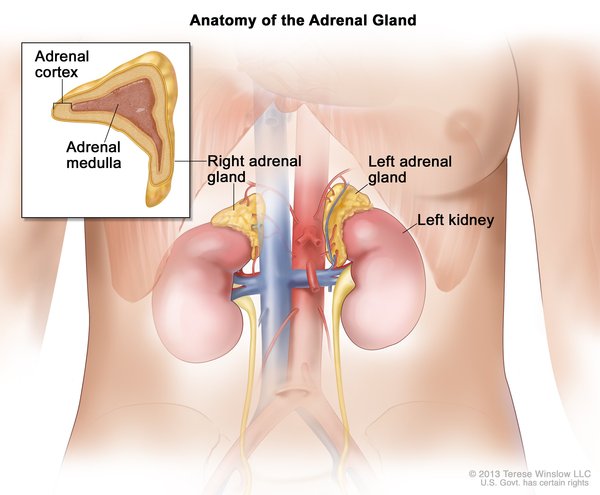 , which are small glands located at the top of each kidney. Normally, the production of cortisol is triggered by the release of a hormone called adrenocorticotropic hormone (ACTH) from the pituitary gland
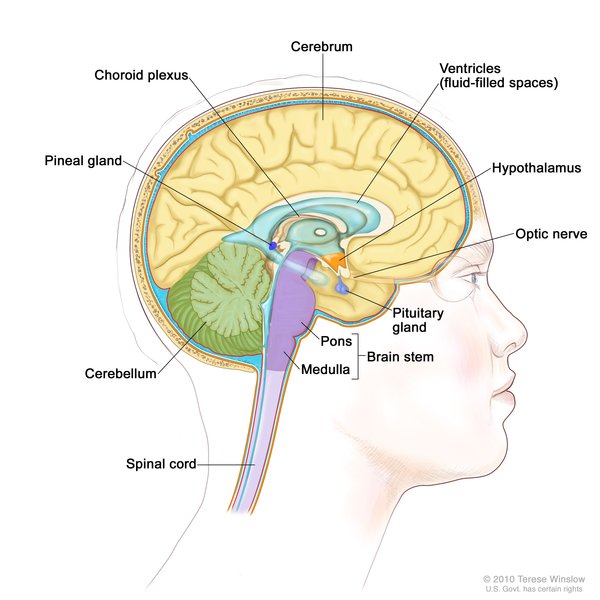 , which is located at the base of the brain.
In people with Cushing disease, noncancerous (benign) pituitary gland tumors (also called adenomas) release too much ACTH. The extra ACTH causes the adrenal glands to release too much cortisol, which leads to the signs and symptoms of Cushing disease.
The cause of Cushing disease is often unknown. However, genetic changes in certain genes cause Cushing disease in up to 70 percent of affected individuals. Genetic changes that cause disease are called pathogenic variants. The pathogenic variants that cause Cushing disease are typically somatic, which means they are acquired during a person's lifetime and are present only in certain cells. The genes that are associated with Cushing disease often play a role in regulating the activity of hormones.
In some people with Cushing disease, pituitary adenomas contain cells that have a pathogenic variant in the USP8 gene. Pathogenic variants in the USP8 gene are the most common genetic cause of Cushing disease.
The USP8 gene provides instructions for making an enzyme that helps regulate the breakdown (metabolism) of certain proteins, including proteins that are involved in important cell signaling pathways. The pathogenic variants in the USP8 gene that are associated with Cushing disease cause cells in the pituitary adenoma to produce a version of the protein that does not switch off properly. As a result, certain signaling proteins become overactive, causing cells within the adenoma to release too much ACTH.
Inheritance
Isolated Cushing disease is typically sporadic, which means it occurs in people with no family history of the disorder.
When Cushing disease occurs as part of a genetic syndrome, it follows the inheritance pattern of that syndrome.
Other Names for This Condition
- Corticotroph pituitary adenoma
- Cushing’s disease
- Pituitary ACTH hypersecretion
- Pituitary corticotroph adenoma
- Pituitary Cushing syndrome
- Pituitary-dependent Cushing syndrome
- Pituitary-dependent hypercortisolism
Additional Information & Resources
Genetic Testing Information

Genetic and Rare Diseases Information Center
Patient Support and Advocacy Resources
Clinical Trials
Catalog of Genes and Diseases from OMIM
Scientific Articles on PubMed
References
- Albani A, Perez-Rivas LG, Reincke M, Theodoropoulou M. PATHOGENESIS OF CUSHING DISEASE: AN UPDATE ON THE GENETICS OF CORTICOTROPINOMAS. Endocr Pract. 2018 Oct 2;24(10):907-914. doi: 10.4158/EP-2018-0111. Epub 2018 Aug 7. Citation on PubMed
- Cohen M, Persky R, Stegemann R, Hernandez-Ramirez LC, Zeltser D, Lodish MB, Chen A, Keil MF, Tatsi C, Faucz FR, Buchner DA, Stratakis CA, Tiosano D. Germline USP8 Mutation Associated With Pediatric Cushing Disease and Other Clinical Features: A New Syndrome. J Clin Endocrinol Metab. 2019 Oct 1;104(10):4676-4682. doi: 10.1210/jc.2019-00697. Citation on PubMed
- Ferriere A, Tabarin A. Cushing's disease. Presse Med. 2021 Dec;50(4):104091. doi: 10.1016/j.lpm.2021.104091. Epub 2021 Oct 27. Citation on PubMed
- Fleseriu M, Auchus R, Bancos I, Ben-Shlomo A, Bertherat J, Biermasz NR, Boguszewski CL, Bronstein MD, Buchfelder M, Carmichael JD, Casanueva FF, Castinetti F, Chanson P, Findling J, Gadelha M, Geer EB, Giustina A, Grossman A, Gurnell M, Ho K, Ioachimescu AG, Kaiser UB, Karavitaki N, Katznelson L, Kelly DF, Lacroix A, McCormack A, Melmed S, Molitch M, Mortini P, Newell-Price J, Nieman L, Pereira AM, Petersenn S, Pivonello R, Raff H, Reincke M, Salvatori R, Scaroni C, Shimon I, Stratakis CA, Swearingen B, Tabarin A, Takahashi Y, Theodoropoulou M, Tsagarakis S, Valassi E, Varlamov EV, Vila G, Wass J, Webb SM, Zatelli MC, Biller BMK. Consensus on diagnosis and management of Cushing's disease: a guideline update. Lancet Diabetes Endocrinol. 2021 Dec;9(12):847-875. doi: 10.1016/S2213-8587(21)00235-7. Epub 2021 Oct 20. Citation on PubMed
- Giuffrida G, Crisafulli S, Ferrau F, Fontana A, Alessi Y, Calapai F, Ragonese M, Luxi N, Cannavo S, Trifiro G. Global Cushing's disease epidemiology: a systematic review and meta-analysis of observational studies. J Endocrinol Invest. 2022 Jun;45(6):1235-1246. doi: 10.1007/s40618-022-01754-1. Epub 2022 Feb 8. Citation on PubMed
- Hernandez-Ramirez LC, Perez-Rivas LG, Theodoropoulou M, Korbonits M. An Update on the Genetic Drivers of Corticotroph Tumorigenesis. Exp Clin Endocrinol Diabetes. 2024 Dec;132(12):678-696. doi: 10.1055/a-2337-2265. Epub 2024 Jun 3. Citation on PubMed
- Kairys N, Anastasopoulou C, Schwell A. Cushing Disease. 2023 Feb 27. In: StatPearls [Internet]. Treasure Island (FL): StatPearls Publishing; 2026 Jan-. Available from http://www.ncbi.nlm.nih.gov/books/NBK448184/ Citation on PubMed
- Lonser RR, Nieman L, Oldfield EH. Cushing's disease: pathobiology, diagnosis, and management. J Neurosurg. 2017 Feb;126(2):404-417. doi: 10.3171/2016.1.JNS152119. Epub 2016 Apr 22. Citation on PubMed
- Martinerie L, Bouligand J, North MO, Bertherat J, Assie G, Espiard S. Consensus statement by the French Society of Endocrinology (SFE) and French Society of Pediatric Endocrinology & Diabetology (SFEDP) for the diagnosis of Cushing's syndrome: Genetics of Cushing's syndrome. Ann Endocrinol (Paris). 2024 Jul;85(4):284-293. doi: 10.1016/j.ando.2024.01.005. Epub 2024 Jan 20. Citation on PubMed
- Pekul M, Szczepaniak M, Kober P, Rusetska N, Mossakowska BJ, Baluszek S, Kowalik A, Maksymowicz M, Zielinski G, Kunicki J, Witek P, Bujko M. Relevance of mutations in protein deubiquitinases genes and TP53 in corticotroph pituitary tumors. Front Endocrinol (Lausanne). 2024 Feb 29;15:1302667. doi: 10.3389/fendo.2024.1302667. eCollection 2024. Citation on PubMed
- Perez-Rivas LG, von Selzam V, Sharma P, Reincke M, Theodoropoulou M. Prevalence and clinical associations of USP8 variants in corticotroph tumours: a systematic review and aggregate data meta-analysis of 2171 cases. Eur J Endocrinol. 2025 May 30;192(6):S41-S52. doi: 10.1093/ejendo/lvaf097. Citation on PubMed
- Rebollar-Vega RG, Zuarth-Vazquez JM, Hernandez-Ramirez LC. Clinical Spectrum of USP8 Pathogenic Variants in Cushing's Disease. Arch Med Res. 2023 Dec;54(8):102899. doi: 10.1016/j.arcmed.2023.102899. Epub 2023 Nov 2. Citation on PubMed
- Reincke M, Sbiera S, Hayakawa A, Theodoropoulou M, Osswald A, Beuschlein F, Meitinger T, Mizuno-Yamasaki E, Kawaguchi K, Saeki Y, Tanaka K, Wieland T, Graf E, Saeger W, Ronchi CL, Allolio B, Buchfelder M, Strom TM, Fassnacht M, Komada M. Mutations in the deubiquitinase gene USP8 cause Cushing's disease. Nat Genet. 2015 Jan;47(1):31-8. doi: 10.1038/ng.3166. Epub 2014 Dec 8. Citation on PubMed
- Sbiera S, Kunz M, Weigand I, Deutschbein T, Dandekar T, Fassnacht M. The New Genetic Landscape of Cushing's Disease: Deubiquitinases in the Spotlight. Cancers (Basel). 2019 Nov 8;11(11):1761. doi: 10.3390/cancers11111761. Citation on PubMed
- Simon J, Theodoropoulou M. Genetics of Cushing's disease. J Neuroendocrinol. 2022 Aug;34(8):e13148. doi: 10.1111/jne.13148. Epub 2022 May 21. Citation on PubMed
- Tatsi C. Cushing Syndrome/Disease in Children and Adolescents. 2024 Mar 14. In: Feingold KR, Adler RA, Ahmed SF, Anawalt B, Blackman MR, Chrousos G, Corpas E, de Herder WW, Dhatariya K, Dungan K, Hamilton E, Hofland J, Jan de Beur S, Kalra S, Kaltsas G, Kapoor N, Kim M, Koch C, Kopp P, Korbonits M, Kovacs CS, Kuohung W, Laferrere B, Levy M, McGee EA, McLachlan R, Muzumdar R, Purnell J, Rey R, Sahay R, Shah AS, Sperling MA, Stratakis CA, Trence DL, Wilson DP, editors. Endotext [Internet]. South Dartmouth (MA): MDText.com, Inc.; 2000-. Available from http://www.ncbi.nlm.nih.gov/books/NBK602210/ Citation on PubMed
- Theodoropoulou M, Reincke M. Genetics of Cushing's disease: from the lab to clinical practice. Pituitary. 2022 Oct;25(5):689-692. doi: 10.1007/s11102-022-01253-9. Epub 2022 Jul 19. Citation on PubMed
- Wanichi IQ, de Paula Mariani BM, Frassetto FP, Siqueira SAC, de Castro Musolino NR, Cunha-Neto MBC, Ochman G, Cescato VAS, Machado MC, Trarbach EB, Bronstein MD, Fragoso MCBV. Cushing's disease due to somatic USP8 mutations: a systematic review and meta-analysis. Pituitary. 2019 Aug;22(4):435-442. doi: 10.1007/s11102-019-00973-9. Citation on PubMed
- Zainab R, Kaur S, Lack J, Similuk M, Tandon M, Ghosh R, Seifert BA, Tokita M, Flippo C, Yan J, Walkiewicz M, Chittiboina P, Tatsi C. Genetic evaluation of pediatric pituitary adenomas and USP8-related genotype-phenotype correlations in Cushing's disease. Pituitary. 2025 Aug 14;28(5):92. doi: 10.1007/s11102-025-01557-6. Citation on PubMed
- Zhang Q, Cai Y, Liu Y, Yao B, Sharma P, Ruoff E, Ma Z, Zopp S, Wu Y, Abreu AP, Zhang S, Tichomirowa MA, Wang Y, Stalla G, Qiao N, Ye Z, Hanzu FA, Chen H, Buchfelder M, Yao Z, Flitsch J, Li Y, Thorsteinsdottir J, Wang Y, Nasi-Kordhishti I, Ye H, Honegger J, Sbiera S, Kaiser UB, Fassnacht M, Zhang Z, Reincke M, Theodoropoulou M, Zhao Y, Perez-Rivas LG. Risk of recurrence after successful surgery for Cushing's disease and association with USP8 genotype and tumour size: an international, retrospective, longitudinal cohort study. Lancet Diabetes Endocrinol. 2026 Apr;14(4):327-336. doi: 10.1016/S2213-8587(25)00396-1. Epub 2026 Mar 2. Citation on PubMed
The information on this site should not be used as a substitute for professional medical care or advice. Contact a health care provider if you have questions about your health.