



There are many reasons to quit using tobacco. Long-term use of tobacco can increase your risk of many serious health problems, but many of these risks lessen quickly if you stop smoking.
Information
If you smoke, you should quit. But quitting can be hard. Most people who have quit smoking have tried at least once, and often several times, without long-term success in the past. View any past attempts to quit as a learning experience, not a failure.
THE BENEFITS OF QUITTING
You may enjoy the following when you quit smoking.
- Your breath, clothes, and hair will smell better.
- Your sense of smell will return. Food will taste better.
- Your fingers and fingernails will slowly appear less yellow.
- Your stained teeth may slowly become whiter.
- Your children will be healthier and will be less likely to start smoking.
- It will be easier and cheaper to find an apartment or hotel room.
- You may have an easier time getting a job.
- Friends may be more willing to be in your car or home.
- It may be easier to socialize. Many people do not smoke and do not like to be around people who smoke.
- You will save money. If you smoke a pack a day, you spend about $2000 a year on cigarettes.
HEALTH BENEFITS
Some health benefits begin almost immediately. Every week, month, and year without tobacco further improves your health.
- Within a few minutes of quitting: Your blood pressure and heart rate drops.
- Within 24 hours to a few days of quitting: Your blood carbon monoxide level drops to normal and so does your blood nicotine levels.
- Within 2 weeks to 3 months of quitting: Your circulation improves and your lung function increases.
- Within 1 to 12 months of quitting: Coughing and shortness of breath decrease. Your lungs and airways are more able to handle mucus, clean the lungs, and reduce the risk of infection.
- Within 1 to 2 years of quitting: Your risk of coronary heart disease is half that of someone still using tobacco. Your heart attack risk drops dramatically.
- Within 5 to 10 years of quitting: Your risk of mouth, throat, esophagus, and bladder cancers are reduced by half. Cervical cancer risk falls to that of a non-smoker. Your stroke risk can fall to that of a non-smoker after 2 to 5 years.
- Within 10 years of quitting: Your risk of dying from lung cancer is about one half that of a person who still smokes.
- Within 15 years of quitting: Your risk of coronary heart disease is the same as that of a non-smoker.
Other health benefits of quitting smoking include:
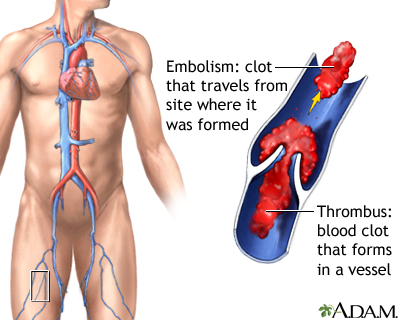
- Lower chance of blood clots in the legs, which may travel to the lungs
- Lower risk of erectile dysfunction
- Fewer problems during pregnancy, such as babies born at low birth weight, premature labor, miscarriage, and cleft lip
- Lower risk of infertility due to damaged sperm
- Healthier teeth, gums, and skin
Infants and children who you live with will have:
- Asthma that is easier to control
- Fewer visits to the emergency room
- Fewer colds, ear infections, and pneumonia episodes
- Reduced risk of sudden infant death syndrome (SIDS)
MAKING THE DECISION
Like any addiction, quitting tobacco is difficult, especially if you do it alone. There are a lot of ways to quit smoking and many resources to help you. Talk to your health care provider about nicotine replacement therapy and smoking cessation medicines.
If you join smoking cessation programs, you have a much better chance of success. Such programs are offered by hospitals, health departments, community centers, and work sites.
Alternative Names
Secondhand smoke; Cigarette smoking - quitting; Tobacco cessation; Smoking and smokeless tobacco - quitting; Why you should quit smoking
Images

References
American Cancer Society website. Health benefits of quitting smoking over time. www.cancer.org/cancer/risk-prevention/tobacco/guide-quitting-smoking/benefits-of-quitting-smoking-over-time.html. Updated May 23, 2025. Accessed October 24, 2025.
Brunetta PG, Kroon L. Smoking cessation. In: Broaddus VC, Ernst JD, King TE, et al, eds. Murray and Nadel's Textbook of Respiratory Medicine. 7th ed. Philadelphia, PA: Elsevier; 2022:chap 66.
Centers for Disease Control and Prevention website. Smoking cessation: fast facts. www.cdc.gov/tobacco/php/data-statistics/smoking-cessation/. Updated September 17, 2024. Accessed October 24, 2025.
George TP. Nicotine and tobacco. In: Goldman L, Cooney KA, eds. Goldman-Cecil Medicine. 27th ed. Philadelphia, PA: Elsevier; 2024:chap 363.
Gotts JE, Benowitz NL. Smoking hazards: cigarettes, vaping, marijuana. In: Broaddus VC, Ernst JD, King TE, et al, eds. Murray and Nadel's Textbook of Respiratory Medicine. 7th ed. Philadelphia, PA: Elsevier; 2022:chap 65.
US preventive Services Task Force website. Final Recommendation Statement. Tobacco Use in Children and Adolescents: Primary Care Interventions. www.uspreventiveservicestaskforce.org/uspstf/recommendation/tobacco-and-nicotine-use-prevention-in-children-and-adolescents-primary-care-interventions. Updated April 28, 2020. Accessed November 4, 2025.
Review Date 10/1/2025
Updated by: Frank D. Brodkey , MD, FCCM, Associate Professor, Section of Pulmonary and Critical Care Medicine, University of Wisconsin School of Medicine and Public Health, Madison, WI. Also reviewed by David C. Dugdale, MD, Medical Director, Brenda Conaway, Editorial Director, and the A.D.A.M. Editorial team.